DeliveredAutumn 2026A State Judicial Institute
I Swear I Was Going the Limit*
*Renamed traffic course
One day in traffic court
A one-day course for Maryland trial judges. It had five presenters, 165 slides, live polls through the day, two table exercises, a printed binder and a digital binder.
The faculty's priority
I listened to my faculty. In the very first planning meeting they talked about the new reckless-driving law and the confusion it was causing. They were interested in hitting that law. The agenda for the day didn't have time for a whole section on the law, and the topic started to fall away under the stress of making slides and everything else.
What I proposed
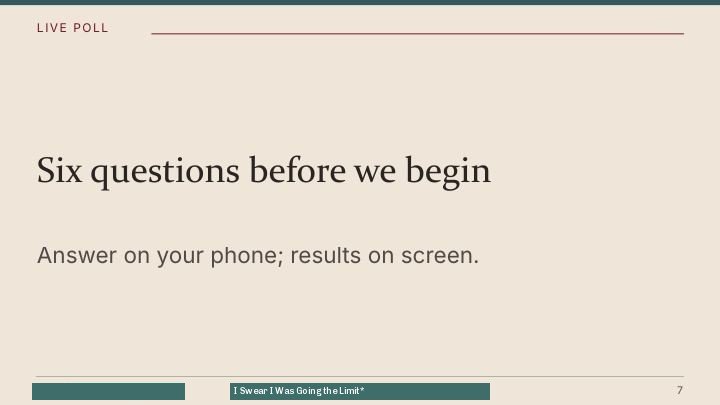
Near the end of the process I realized we had no icebreaker and no tech check to make sure everybody was hooked up to Slido, which is how judges answer polls on their phones. I brought the reckless-driving law back up and said: what if that's our icebreaker and our tech check? The idea was very well received. Judges answered six Slido questions by phone about their experience with reckless-driving cases and the sentencing alternatives they'd used, which came back later in the day. My reasoning came from teaching: getting people talking early can make it easier to keep the discussion going. For the closing table exercise I pitched a hypothetical, and the faculty chose reckless driving for it.
My role
Five faculty taught: three judges and two agency presenters. They owned the law, agency policy, and every substantive call. I owned the instructional sequence, the opening diagnostic poll design, the run of show, the 165-slide visual system, the presenter prep packets, and the print and digital binders.
Before and after
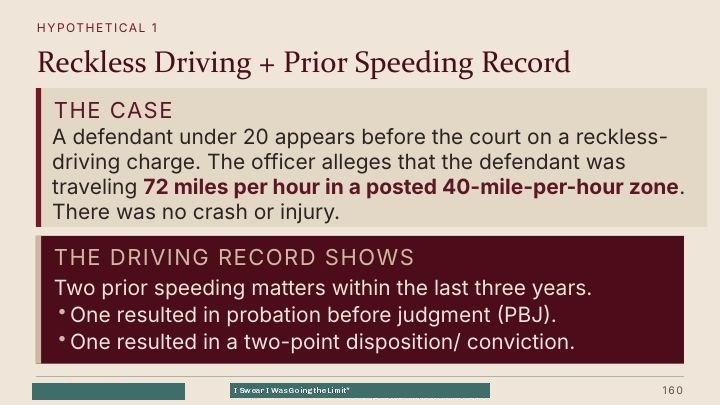
The 2025 deck beside the 2026 deck, with the faculty's words unchanged.
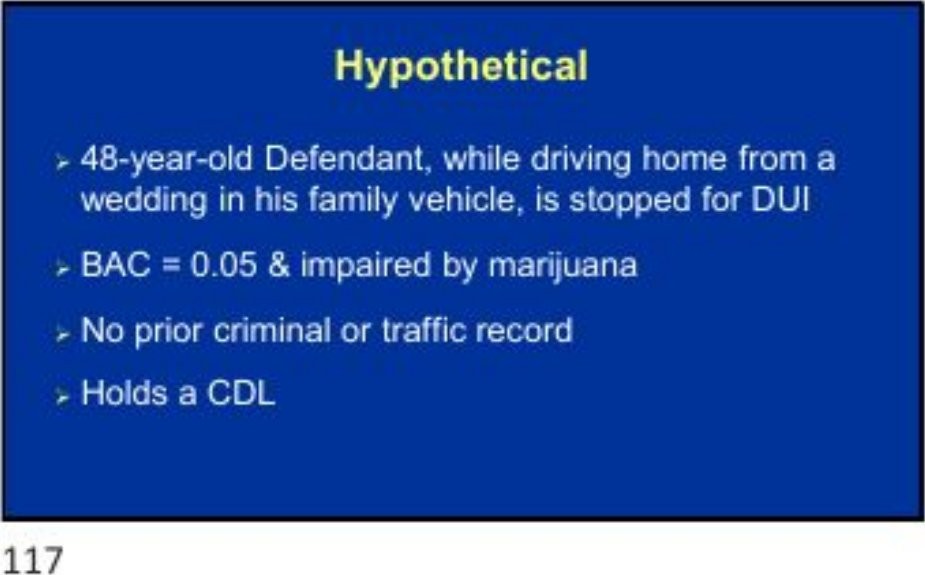
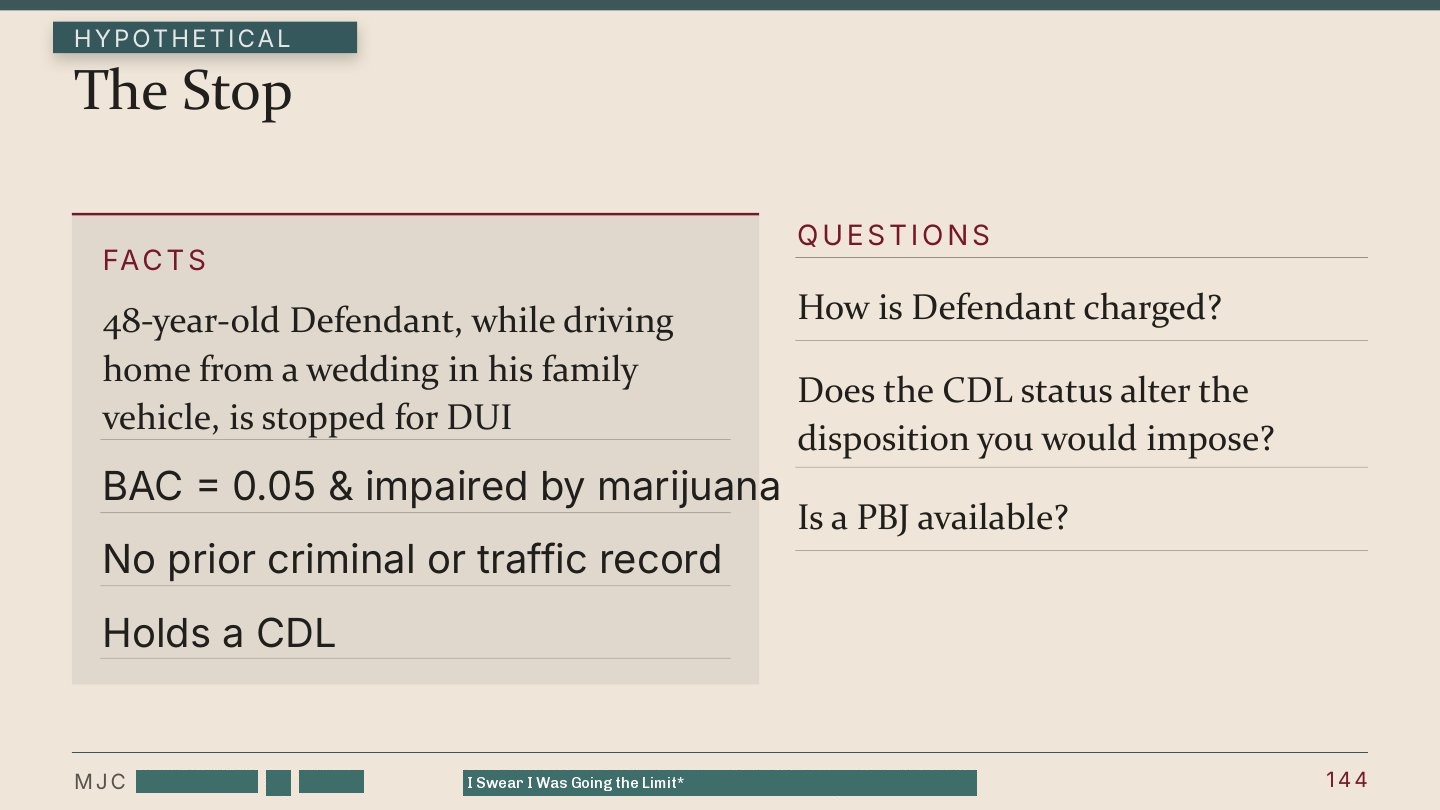
Judge R's facts, unchanged. Delivered autumn 2026.
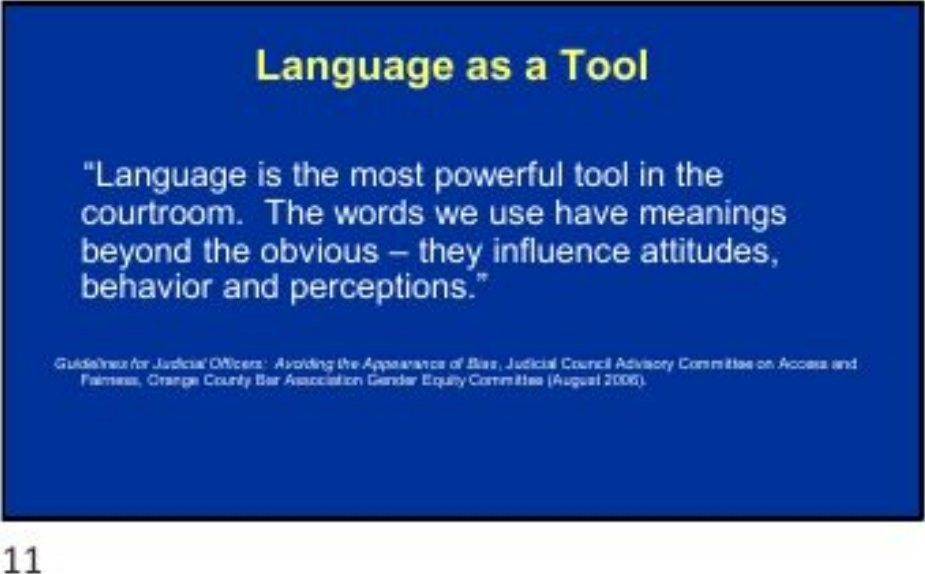
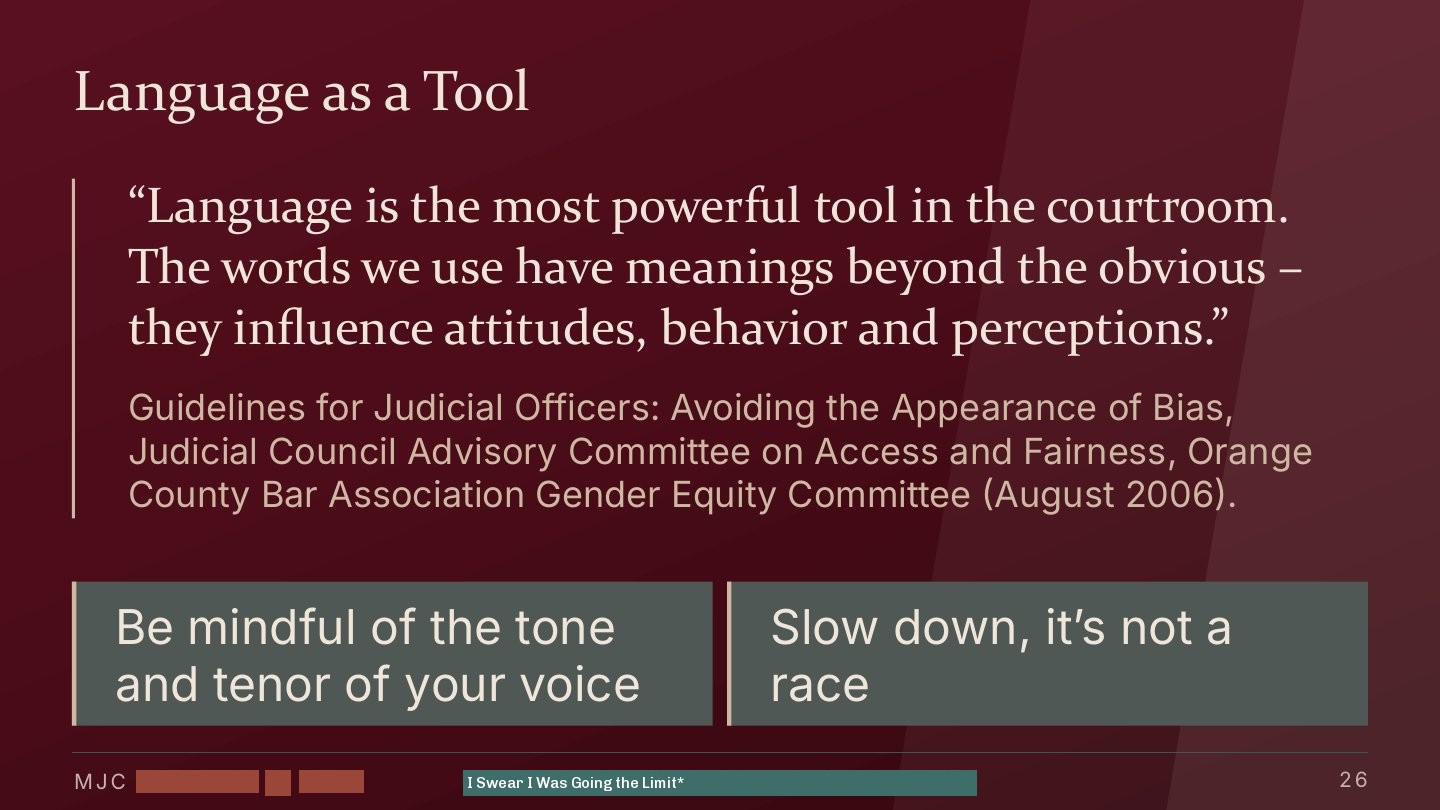
The coordinating judge's quotation and her two reminders, unchanged. Delivered autumn 2026.
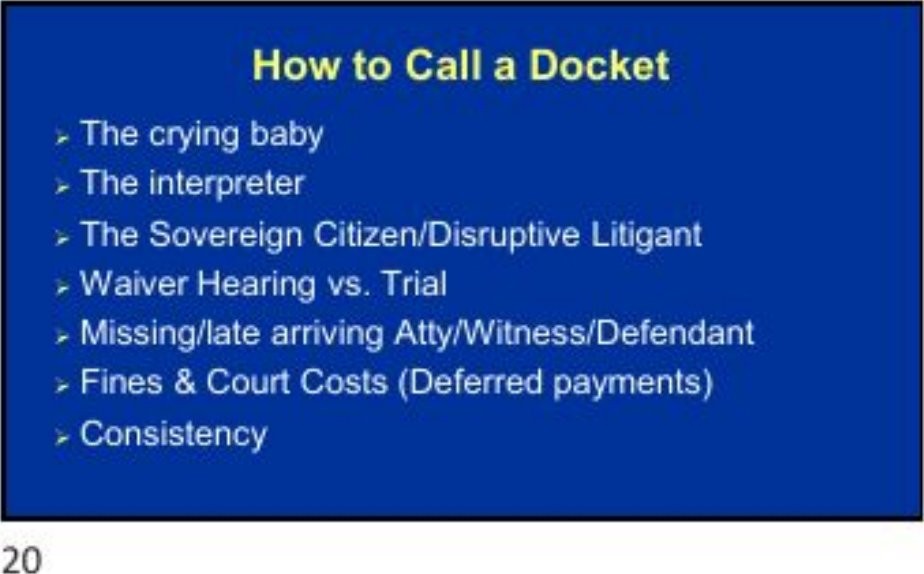
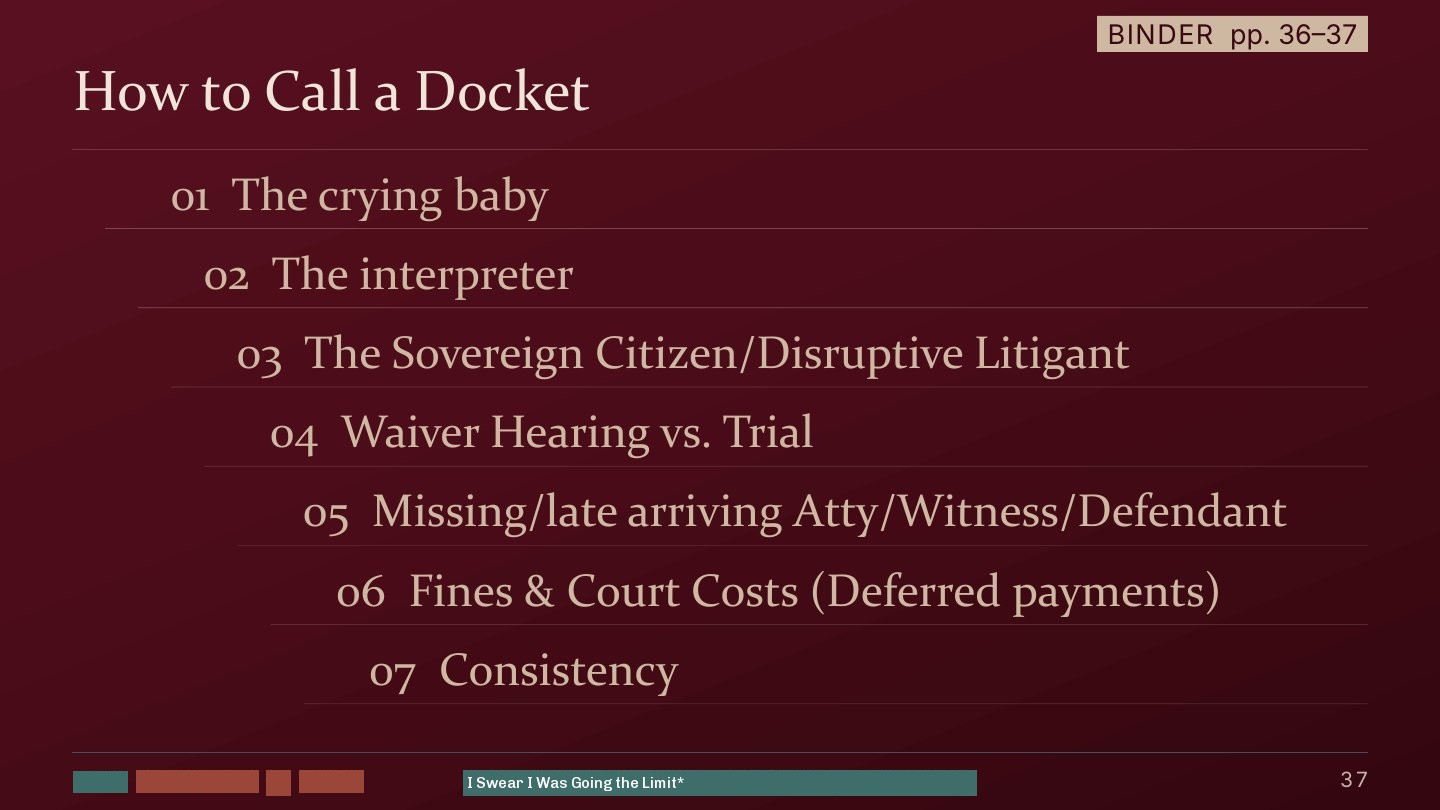
The coordinating judge's list, unchanged. Delivered autumn 2026.
What came of it
The course ran in autumn 2026. The polls made for rich conversation at the very start of the day. They opened the door to this: we're all Maryland judges, but we all handle this new law very differently. Later in the day, judges spoke more freely when questions came up. That was my observation as program manager.
When I first met Judge R in person, she put her stuff down, asked if she could hug me, and thanked me for the work I had done preparing her for our course together.
My account, at the annual conference · spring“Thank you just for all the stuff that you sent for today. I mean, for me, it really helped organize and focus on what specifically I need to start brushing up on and what I need to do.”
Judge R, on the prep note sent before the meeting · spring, 32:27“Oh, beautiful.”
Judge C, on the redesigned chart slide · early autumn, 21:42The day
Faculty sectionsTable work, all facultyWelcome and wrap-upBreaks and lunch
| Time | Session | Who | What the judges do | Deck |
|---|---|---|---|---|
| 9:00 – 9:20 | Welcome | Coordinating judge | Six live polls. | Slides 1–14 |
| 9:20 – 10:00 | Managing your docket and courtroom control | Coordinating judge | Three live polls, a show of hands and a discussion of high-volume dockets. | Slides 15–46 |
| 10:00 – 11:00 | Sentencing alternatives and problem drivers | Judge C | Four video segments and an optional debrief. | Slides 47–64 |
| 11:00 – 11:10 | Break · slide 65 | |||
| 11:10 – 12:10 | Provisional and out-of-country licensing | MVA presenter | No live moments scheduled. | Slides 66–85 |
| 12:10 – 12:40 | Lunch · slide 86 | |||
| 12:40 – 1:50 | Medical review of at-risk drivers | Medical Advisory Board presenter | Case reviews, with the block extended for case discussion, then questions. | Slides 87–137 |
| 1:50 – 2:00 | Break · slide 138 | |||
| 2:00 – 3:00 | Masking and commercial driver's license implications | Judge R | Nine live polls and four discussions, built around her cases. | Slides 139–158 |
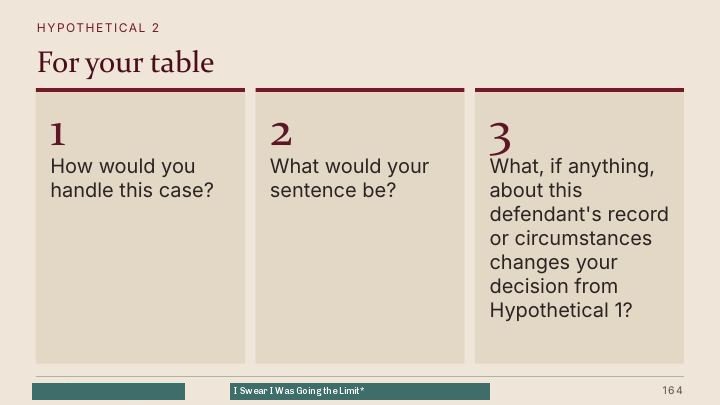
| 3:00 – 3:20 | Afternoon application | All faculty | Table work: two hypotheticals, each ending with three questions for the table. | Slides 159–164 |
| 3:20 – 3:30 | Wrap-up and questions | Coordinating judge | Questions and the course survey. | Slide 165 |
The day's documents
The deck
Faculty names are replaced with initials in the file itself.
 1 Title
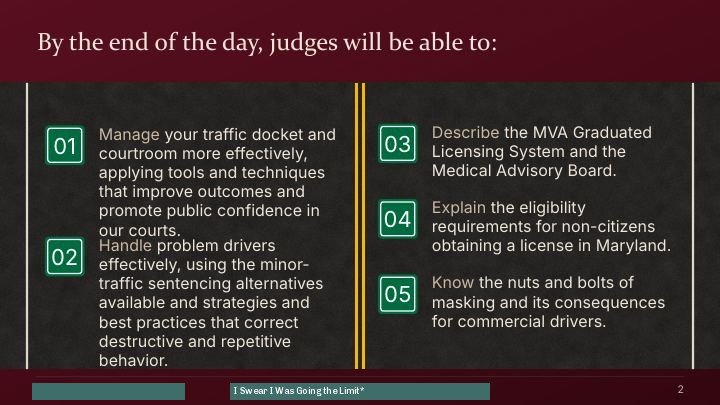 2 Learning outcomes
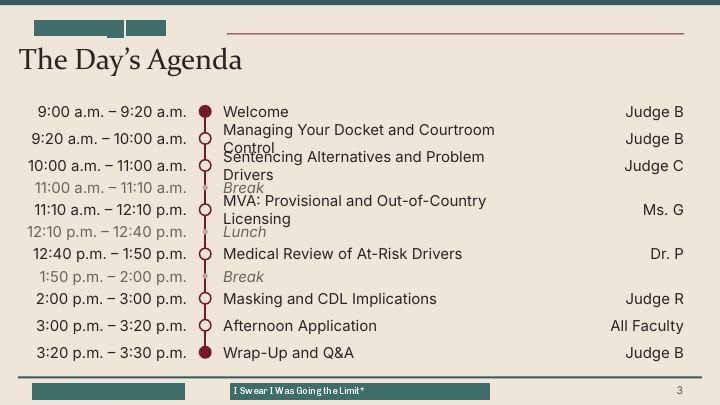 3 The day's agenda
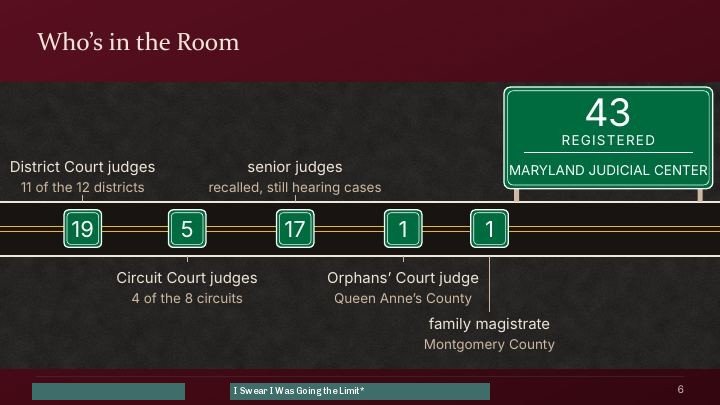 6 Who's in the room7 Six questions before we begin
 15 Section: docket and courtroom control
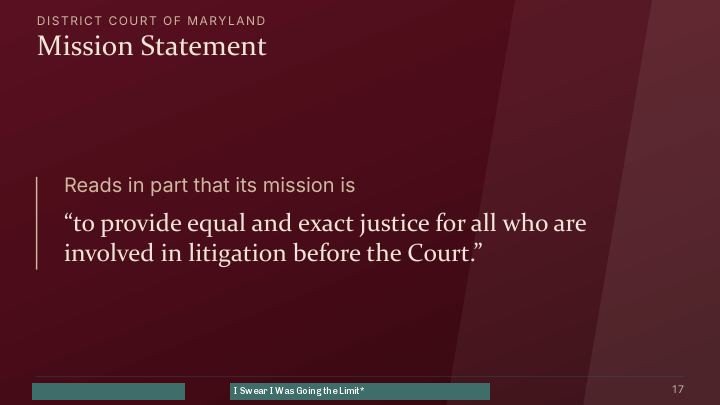 17 Mission statement
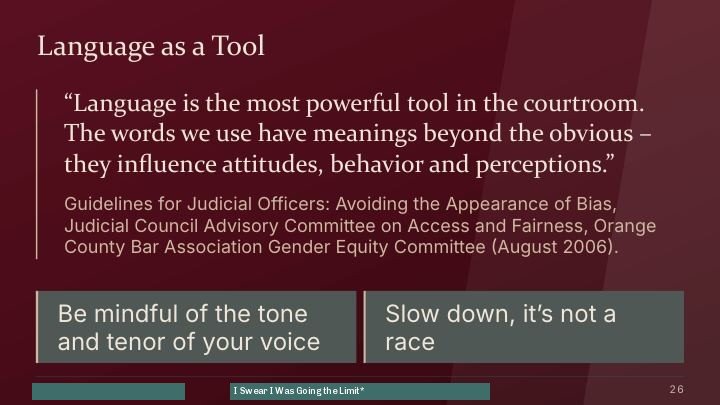 26 Language as a tool
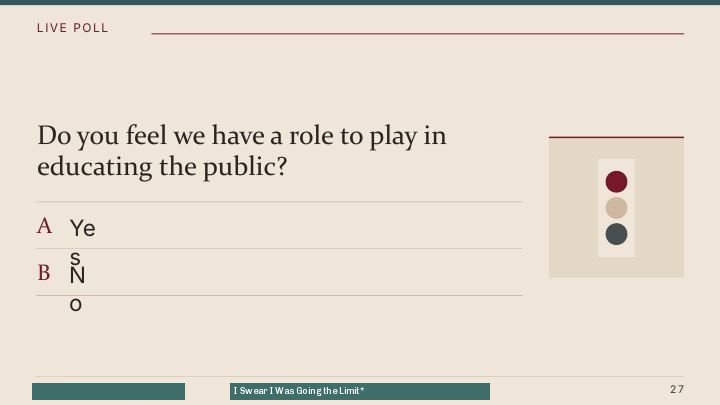 27 Live poll
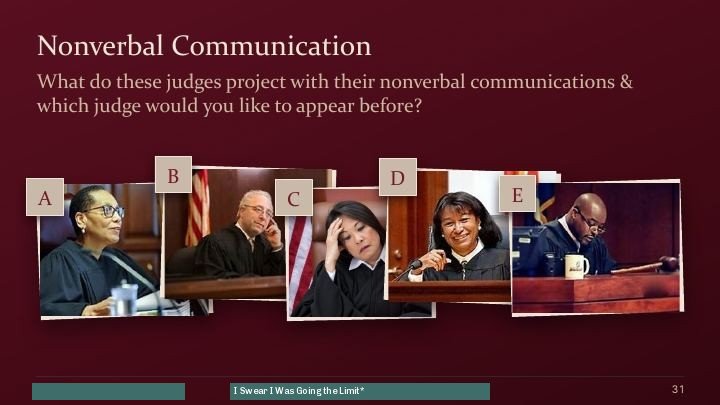 31 Show of hands
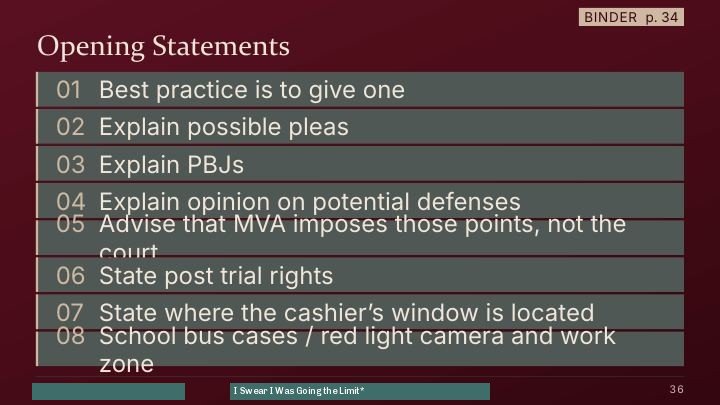 36 Opening statements
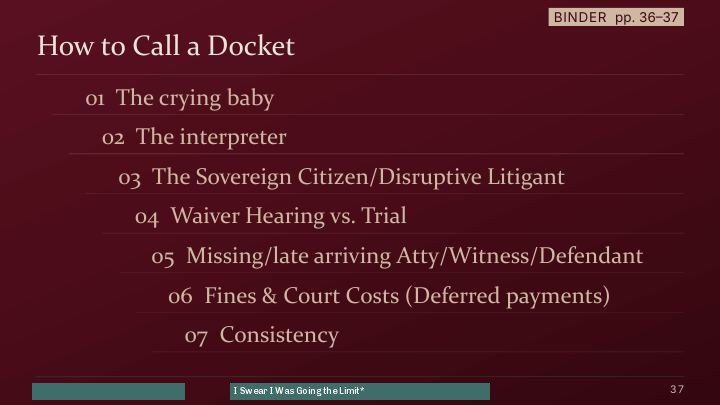 37 How to call a docket
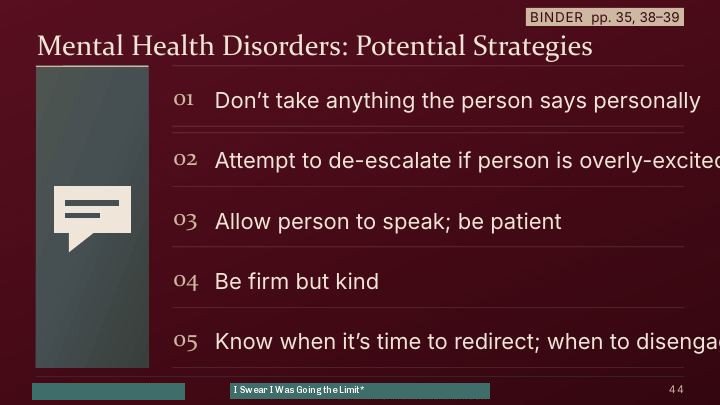 44 Mental health strategies
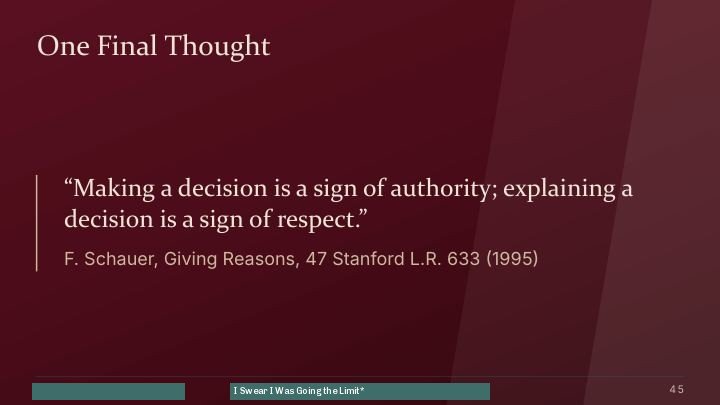 45 One final thought
 47 Section: sentencing alternatives
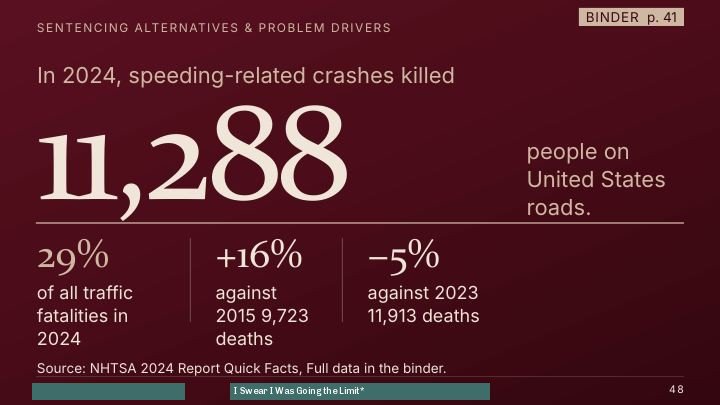 48 Speeding deaths, 2024
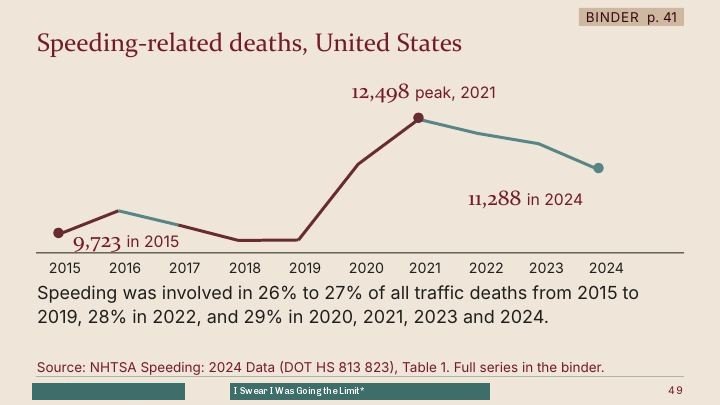 49 Ten years of speeding deaths
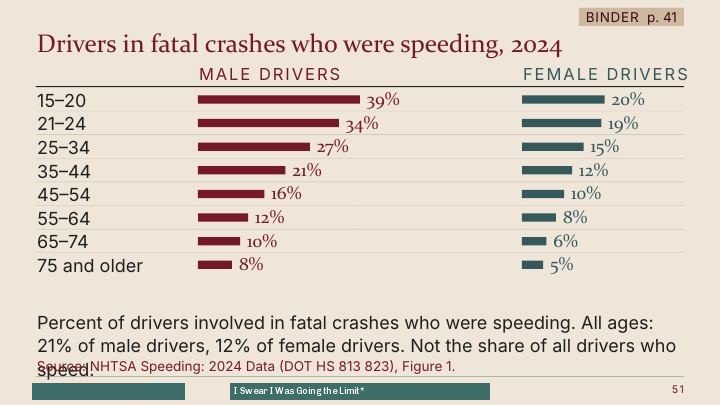 51 Fatal crashes by age and sex
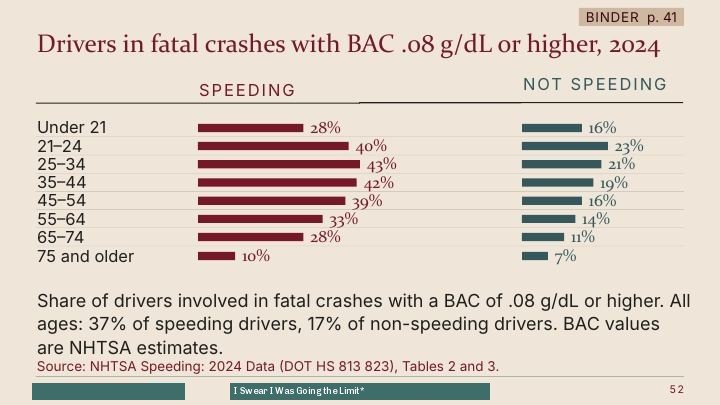 52 Fatal crashes with BAC .08 or higher
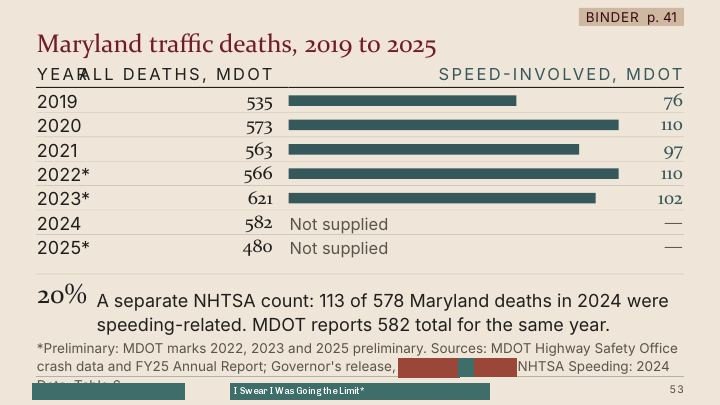 53 Maryland traffic deaths, 2019 to 2025
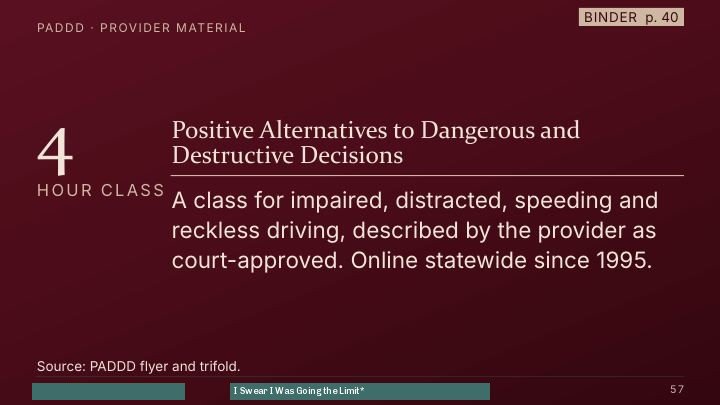 57 A four-hour class
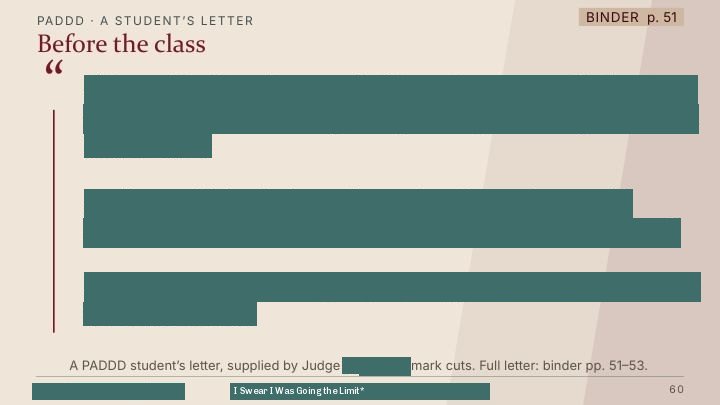 60 A student's letter
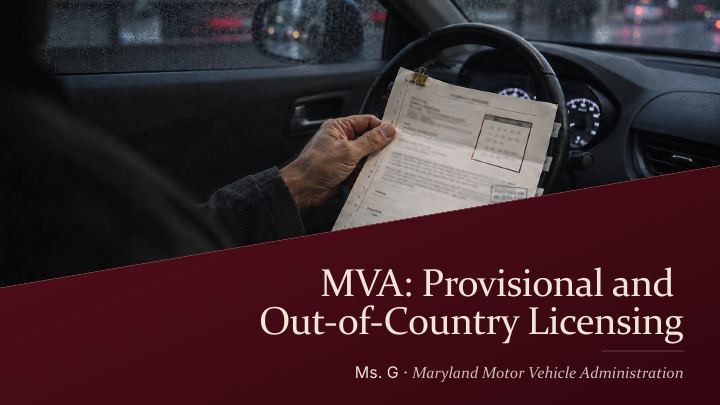 66 Section: licensing
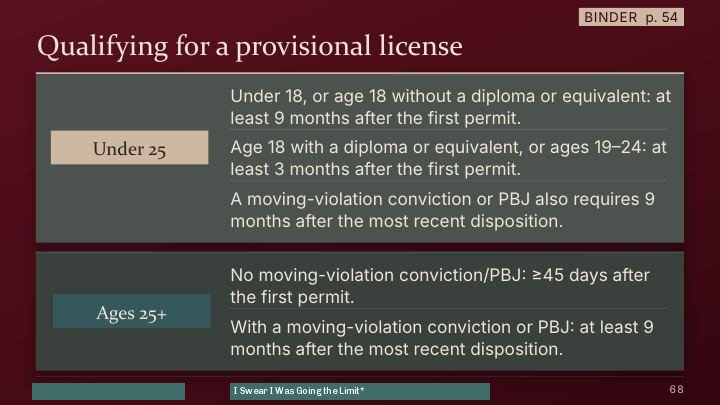 68 Qualifying for a provisional license
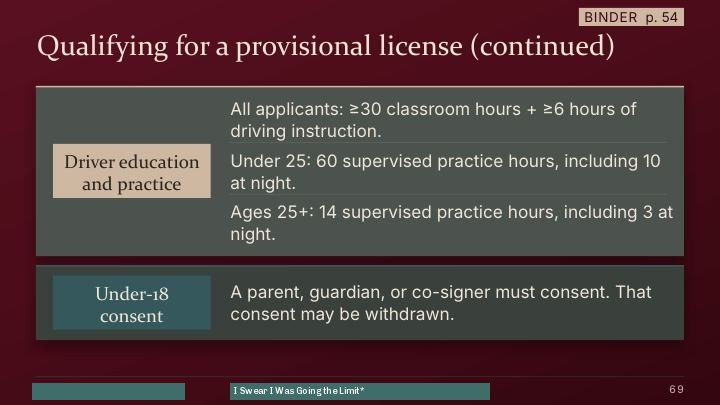 69 Provisional license, continued
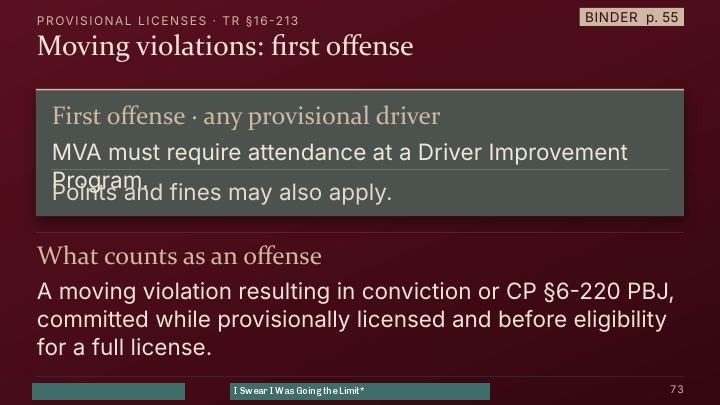 73 Provisional licenses, TR 16-213
 87 Section: medical review
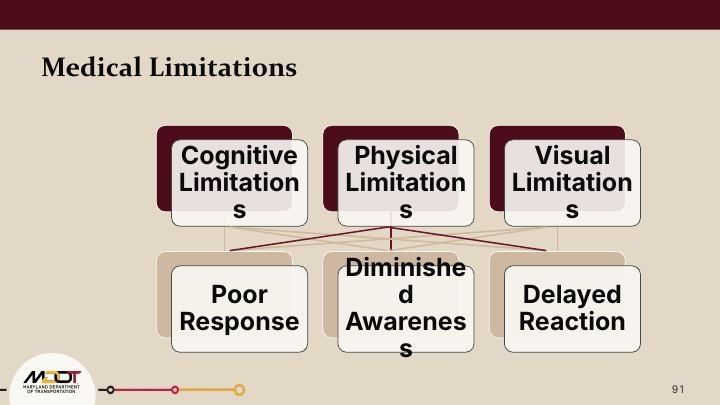 91 Medical limitations
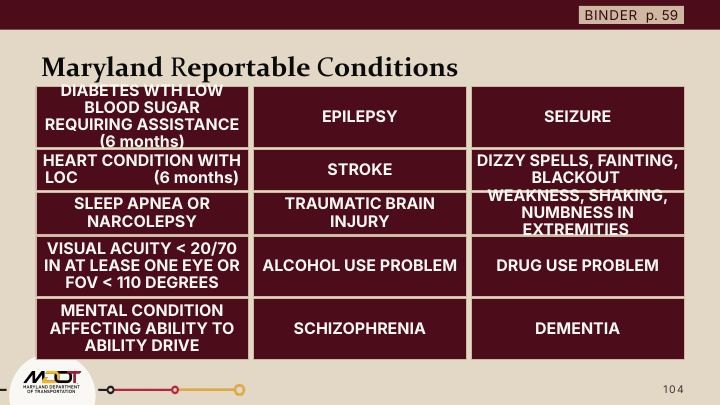 104 Maryland reportable conditions
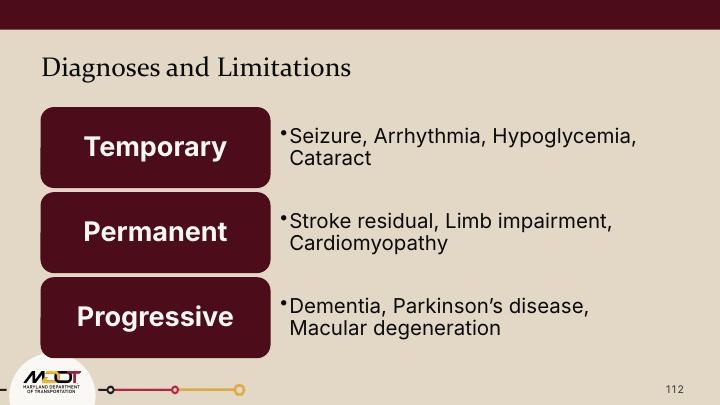 112 Diagnoses and limitations
 139 Section: masking
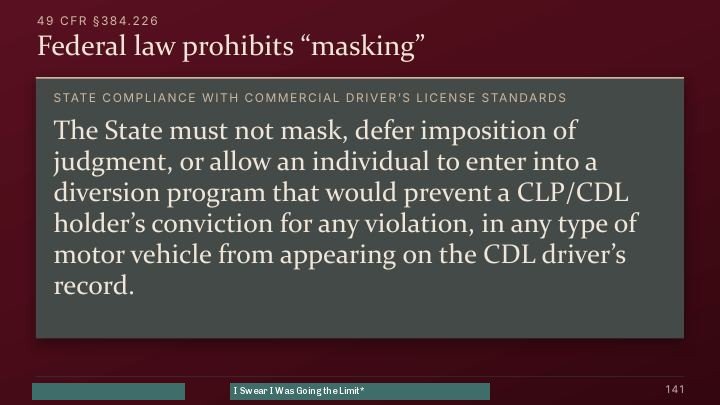 141 Federal law prohibits masking
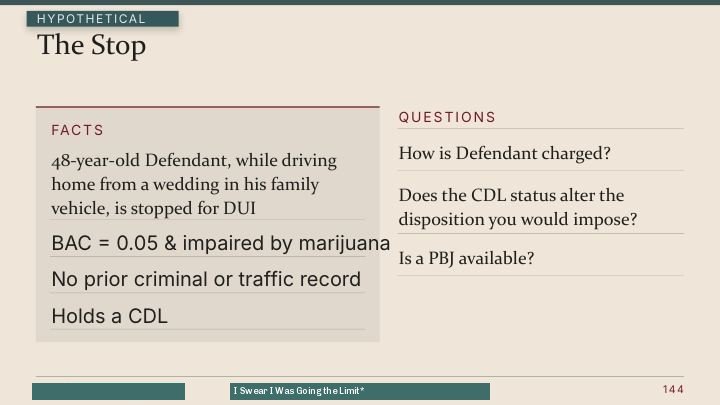 144 The Stop
 146 Live poll
 159 Afternoon application160 Hypothetical 1
 164 Hypothetical 2
 165 Thank you
How this was made
From the emails and the deck
Material in any form
Please don’t feel obligated to spend time formatting. You can send me slides, notes, an outline, or marked-up material, and I’ll put it into the deck and return it for your review.
My email to the MVA presenter, late summer. Open the page.Her first look
“I did kind of briefly run through the slide deck that was sent to me, but it was just a little overwhelming.”
The MVA presenter, on the deck of earlier material I had sent her · late summer, 7:23A question on her slide 3
On slide 3, age 18 appears in both the 16–18 and 18+ bands, while the 18+ and 19–24 bands both use the same three-month permit period.
My email to the MVA presenter, early autumn. Open the page.The slide should be corrected to say 18 and over with a diploma or equivalent
Her reply, highlighted in my email · early autumn. Open the page.One place for everything
“I have pulled the course materials into two files so you can review what matters to you without having to sort through the whole production pile.”
My email to the faculty, early autumn. Open the page.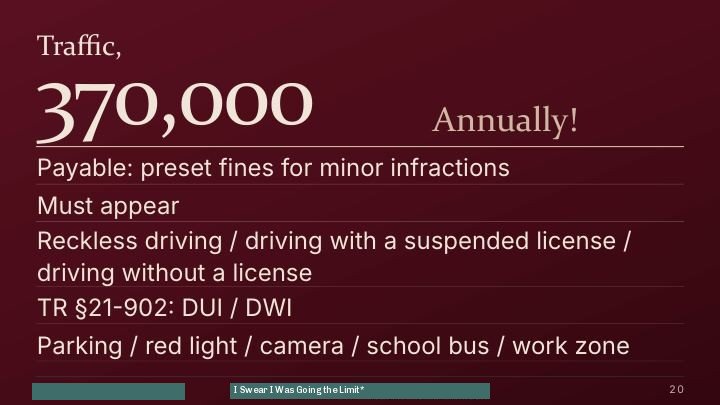 20 The traffic caseload
 64 The optional debrief, title only
Two reversals
The docket figure I cut and she restored
The coordinating judge's docket section opened on a figure for traffic cases a year. I couldn't find a source for it, so I cut it. She came back to me with a specific number, and I added it back in. Open slide 20
The Medical Advisory Board slides: my mistake
The Medical Advisory Board presenter sent a deck that was already designed and branded by her agency. I ran it through the AI slide program I wrote, the way I ran every faculty deck, and it came out matching the rest of the course. Then, putting the binder together and checking slide by slide that every word faculty gave me was there, I saw what the program had done: it had stripped her design and lost its personality, and it had cut some of her slides entirely, the examples of what a driver sees on an eye exam. My guess is it skipped them because they were pictures, not text. The AI didn't catch that this wasn't an unformatted faculty deck. That was my fault. What went in the binder was her own slides with only the colors and fonts changed: the background, the infographics and the SmartArt in the course colors, everything else as she built it. I learned that the program pulls everything toward the middle. Most of what I get from experts starts below that middle, and the program raises it: better color, better fonts, accessible. A deck that's already good can get pulled down to it. Open slides 87 to 137
One more pair
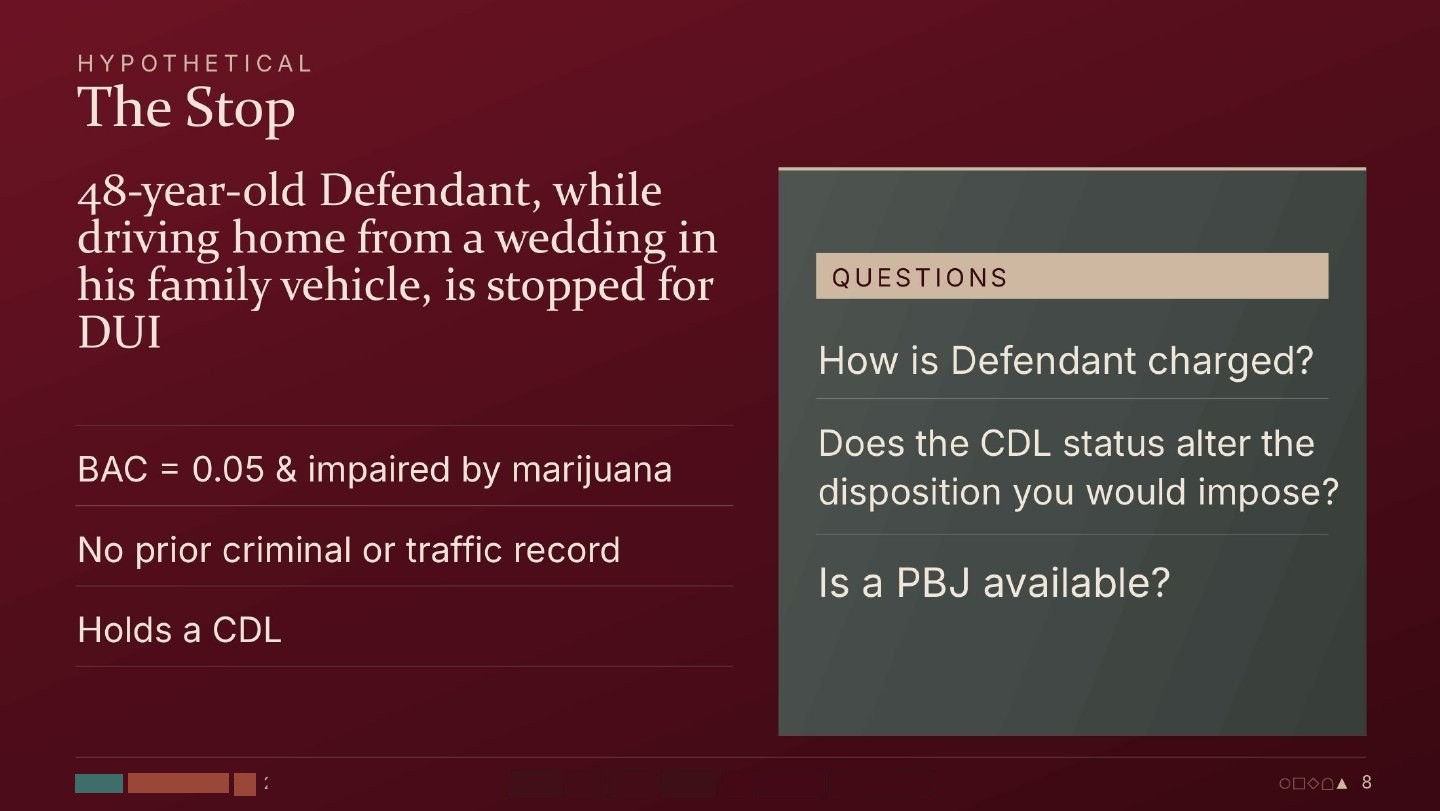
Review draft to delivered slide, September to autumn 2026.
From the planning and review calls
“That's really where your expertise comes in, because they're not education professionals. If we are including Slido, or doing small groups and stuff, you are the expert to know how we can do the smoothest transition possible, so we're not losing instruction time.”
Program staff · late summer, 36:49“If you want to call attention to something during the day, it goes in the binder. If it's referenced, that's good for them to have at some point, then we should try to make it digital and save the paper.”
Me, the binder rule · early autumn, 40:47“First, I just want to thank you for updating the slide deck from last year's presentation. It's a very nice facelift.”
Judge R, on the deck I rebuilt · spring“I mean, for me, it really helped organize and focus on what specifically I need to start brushing up on and what I need to do.”
Judge R, on the planning materials · spring“Thank you for all the work that you've done on the PowerPoint and slides.”
Judge R, on the review call · early autumn, 12:16“You all know the content. I'm here to try to make it flow well.”
Me, to the faculty on the first planning call · spring“A lot of your slides, I appreciate that you have minimal text on the screen. It's a suggestion to talk with and to the judges, not at the judges.”
Me, to the coordinating judge on a planning call · late summer“Tables are mixed-jurisdiction from check-in (a number on each name tag), so the cross-county comparison is built in and nothing reshuffles late in the day.”
My email to the coordinating judge on how the closing tables would run, a proposal · early autumn“This was so helpful. I'm so glad that we got to do a little chat, just to check in with everybody.”
Judge R, closing the review call · early autumn, 45:33“We didn't even cover masking last year. […] By the time we came back in the afternoon from that, to go through Slido, it just was not enough time to get to masking.”
Judge R, on the previous year · spring, 5:07“I like to think, what can judges leave this course with that's something they'll actually use, and not this binder that we're printing out and doesn't do anything?”
Me, on the first planning call · spring, 28:14“I want to make sure that you're all able to hit the important beats that you think, if the judge leaves at 3:30, I am glad they now know this when they go back to the bench.”
Me, closing the second planning call · late summer, 31:58“The exam numbers follow COMAR 11.12.09.04; please confirm I read your material right.”
My note to Judge C · early autumn“Testing waivers (slide 62): one condition now, valid or expired no more than one year. Is that right?”
My note to the MVA presenter · early autumn“Your block now runs 12:30 to 1:40, so the extra case-discussion time we talked about is in.”
My note to the Medical Advisory Board presenter · early autumn“The current provision excepts parking, vehicle-weight, and vehicle-defect violations. Since your final question (slide 120) involves a weight violation, do you want that exception shown?”
My note to Judge R · early autumnWhat came in, and what I made from it
Judge C
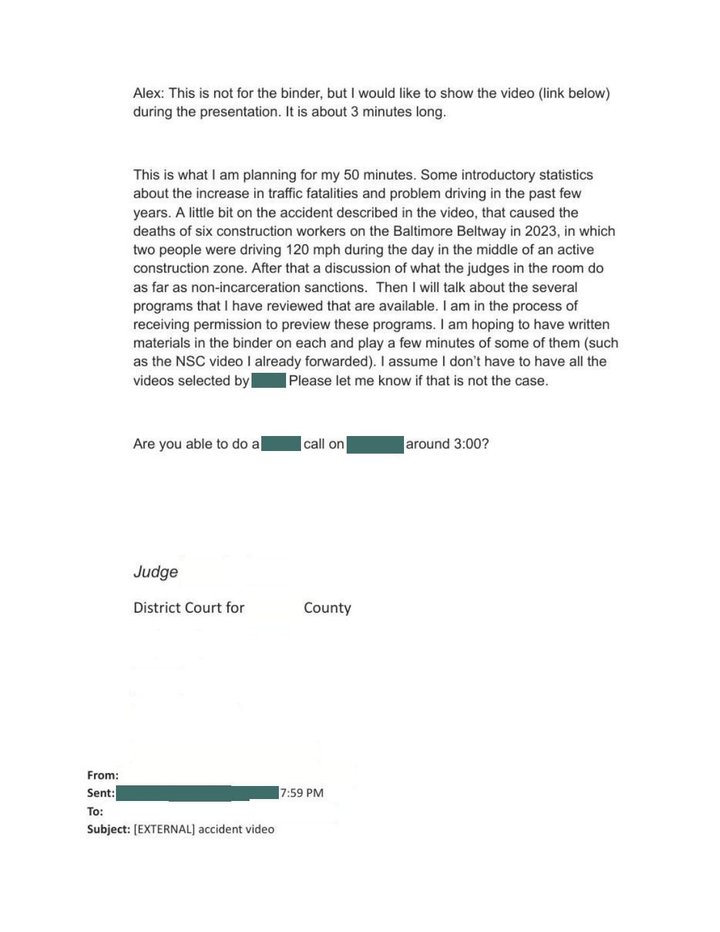 The email with the order of his block
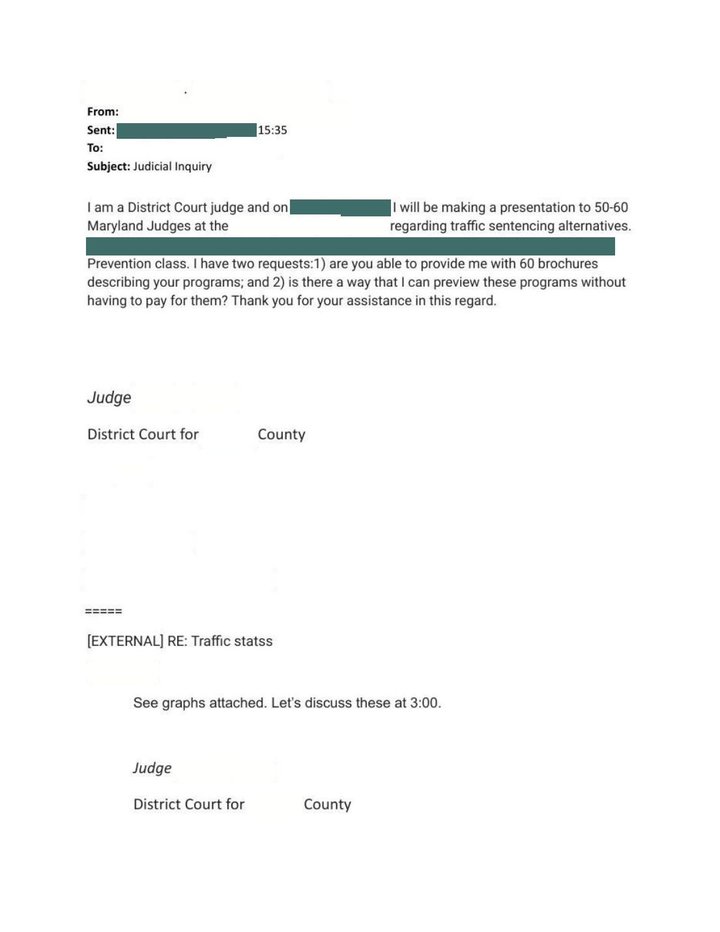 Statistics from the National Safety Council
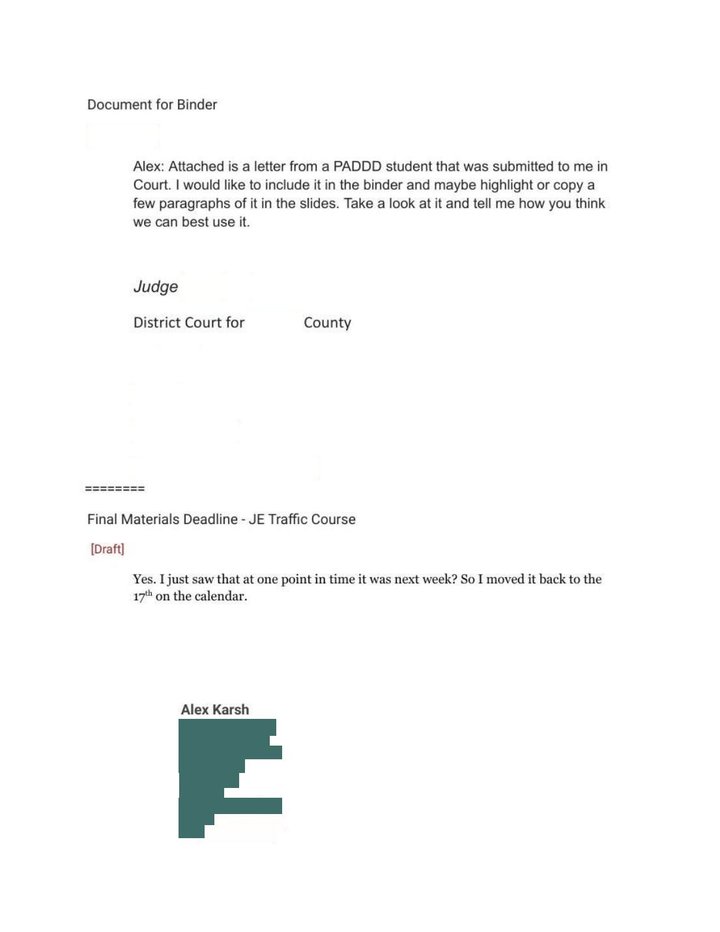 A student letter for the binder
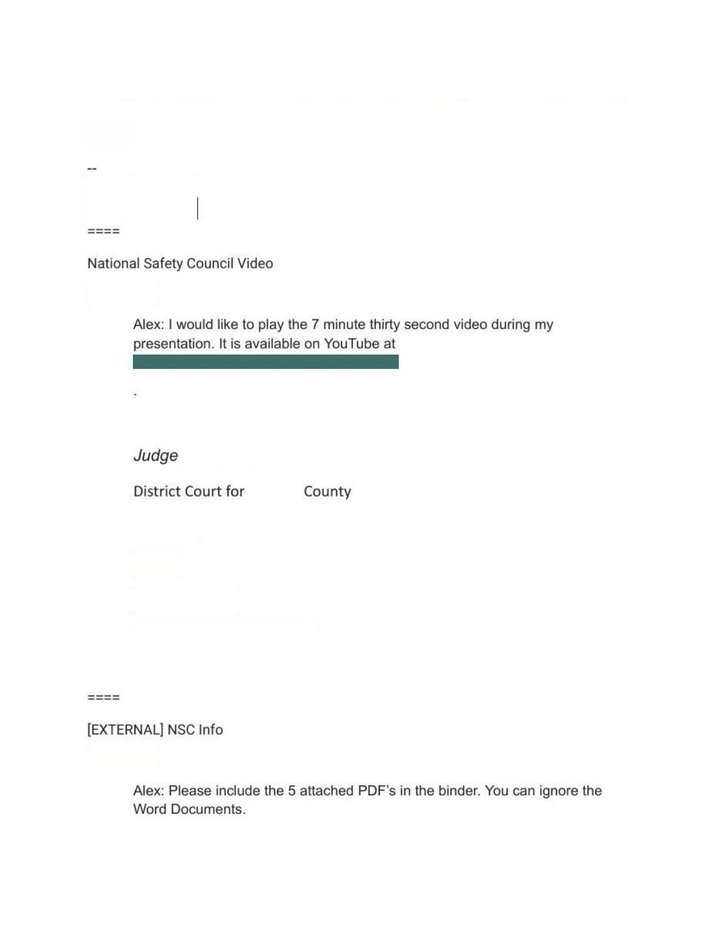 Five program PDFs for the binder
The MVA presenter
She sent the provisional-license rules as prose. They became slides 66 to 85, one rule to a slide.
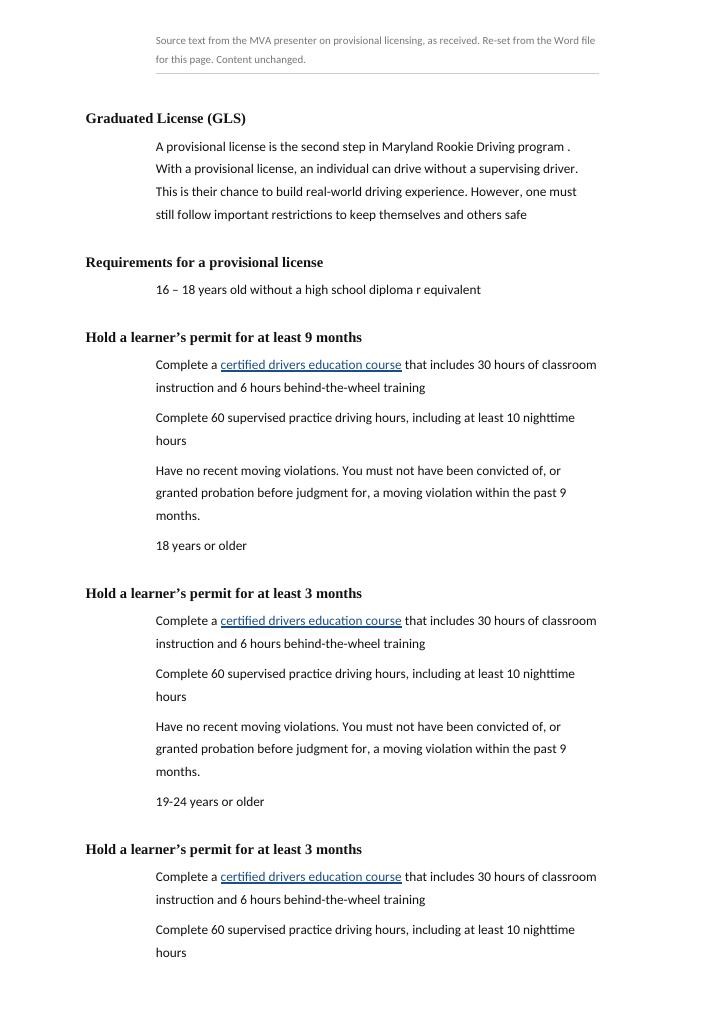 Her source text on provisional licensing, as received
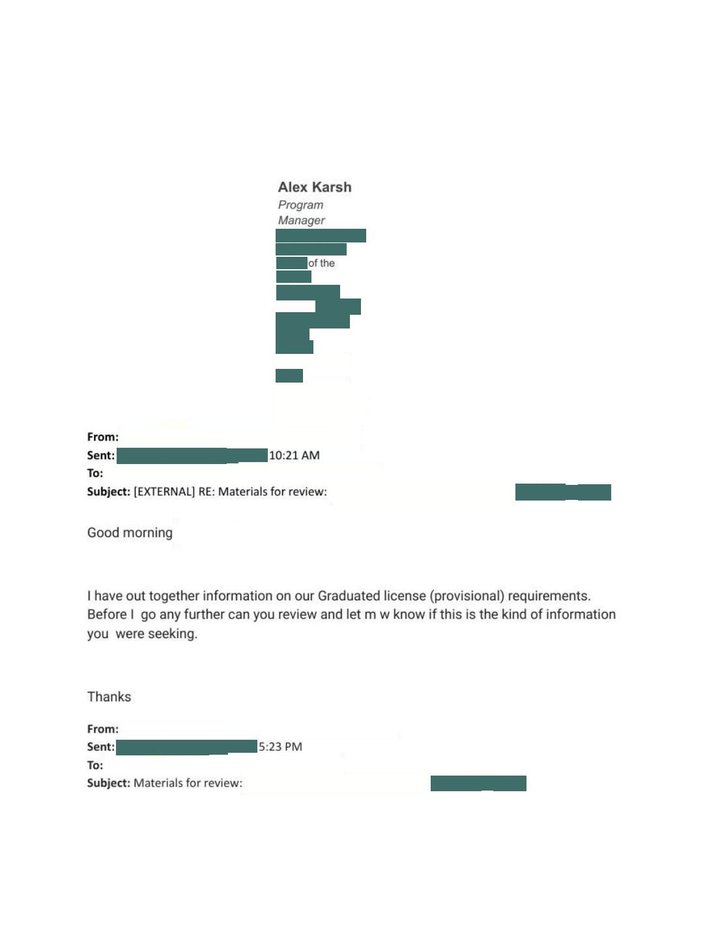 Materials for review, August
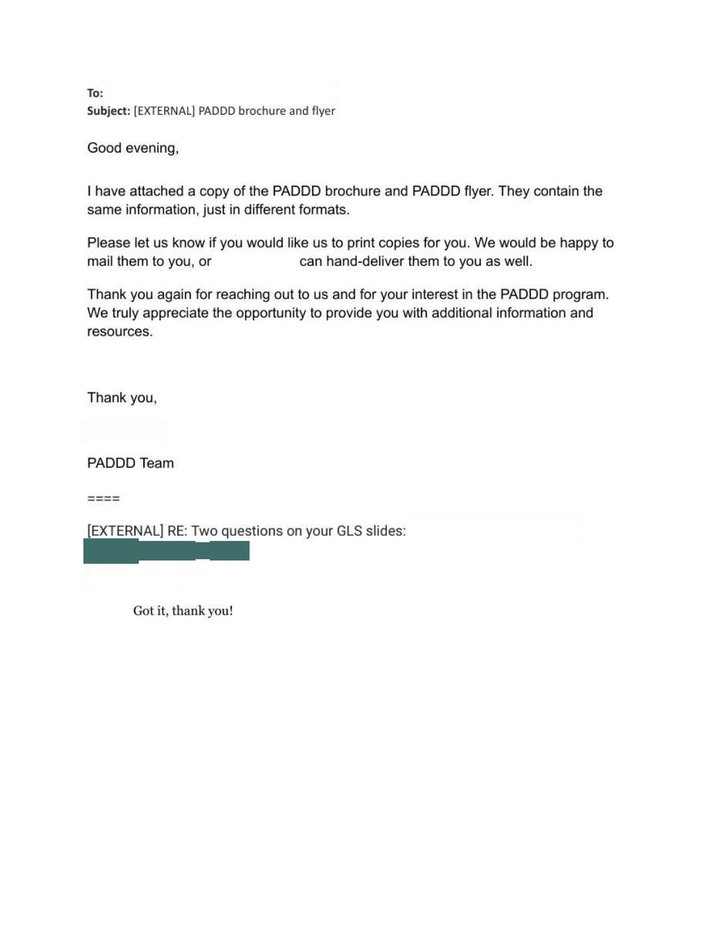 Two questions on her slides, September
The Medical Advisory Board presenter
Her presentation, two cases, references and bio arrived by email and became slides 87 to 137.
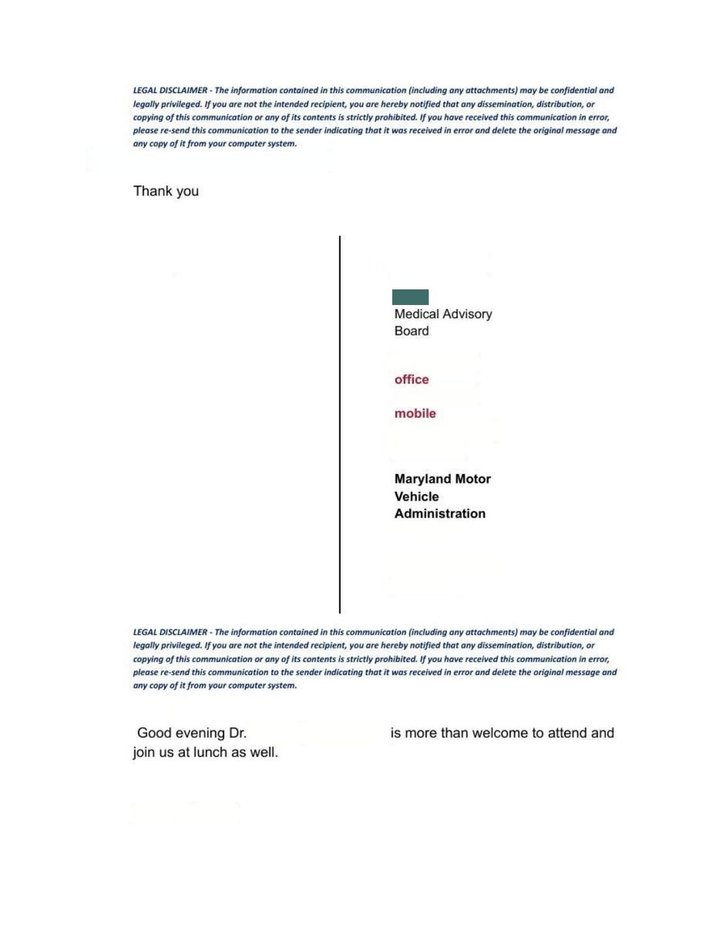 Session notes, materials and bio
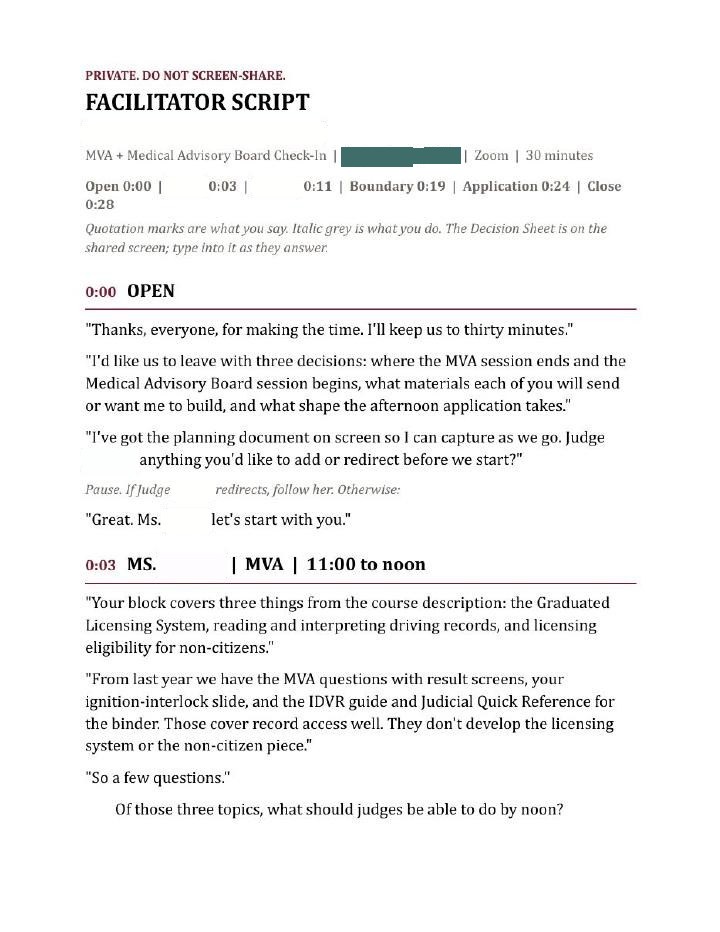 The script for her planning call
The coordinating judge
Her notes on two reckless-driving cases came through her chambers. The notes were typed up for faculty review with the same three questions under each case and became the closing hypotheticals.
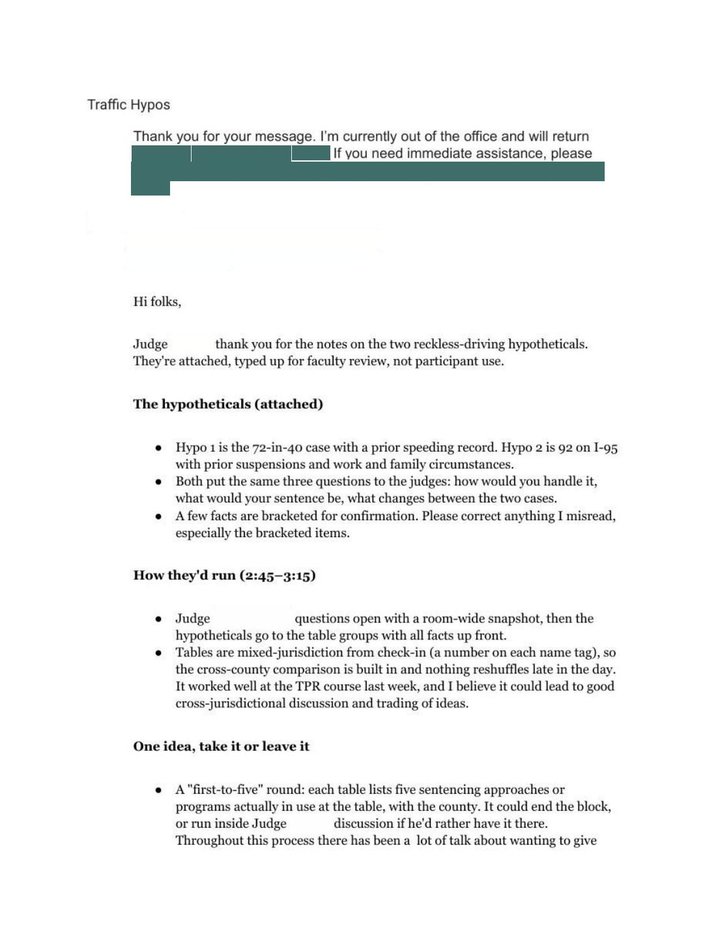 Traffic hypos: the notes and the run order
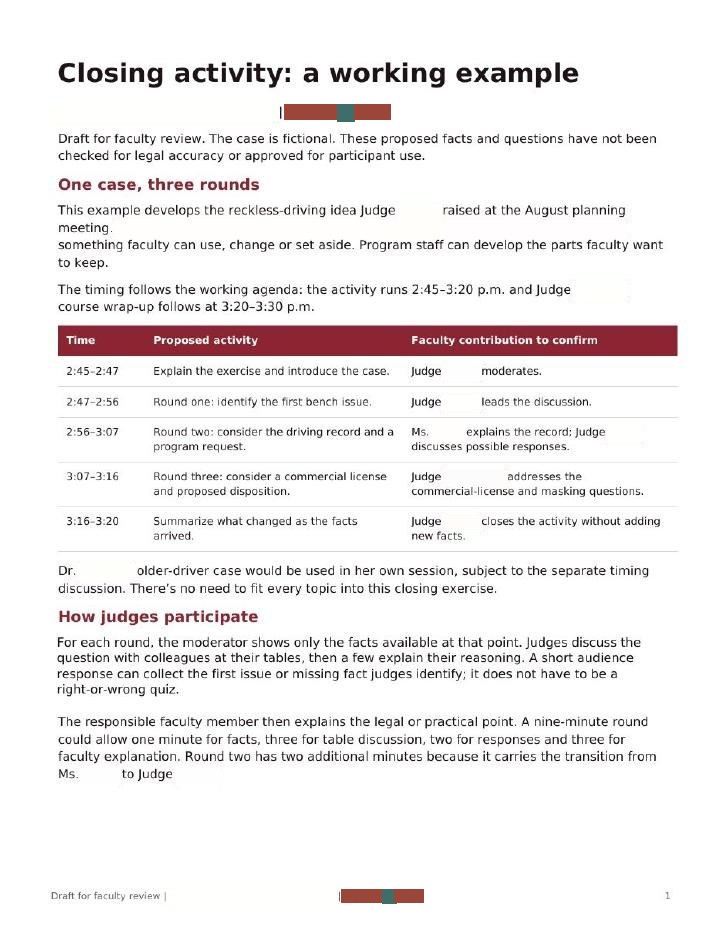 Typed up for faculty review, 3 pages
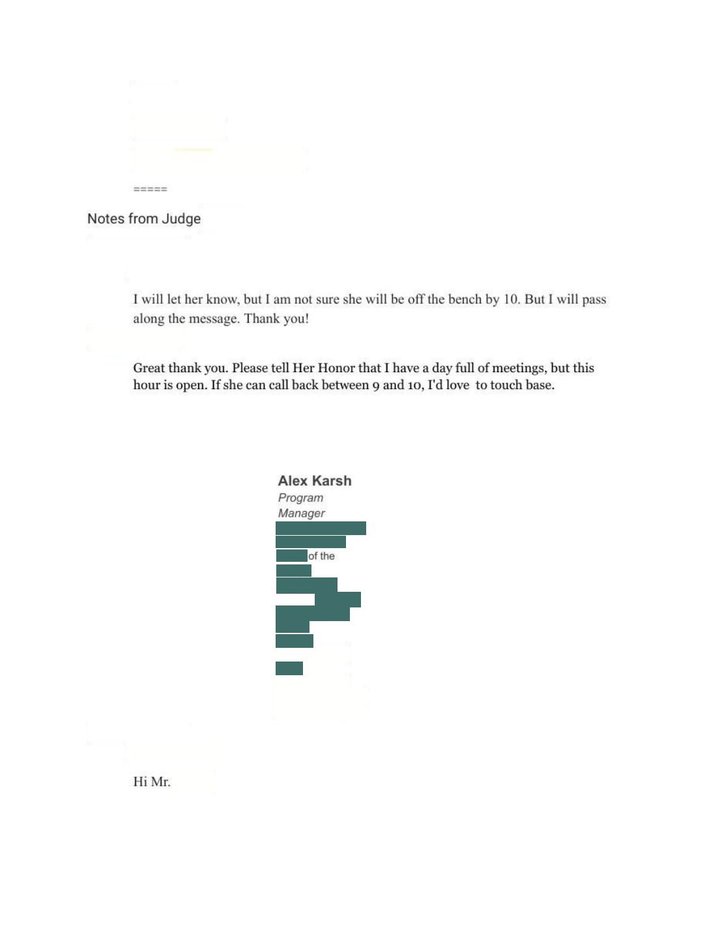 Notes from her chambers
The six months
- April
- April · Prep notes to each presenterThe first draft ran five pages; version six ran two.
- April · Faculty meeting 1, recordedThe three judges reordered the morning.
- AugustFour color options for the deck went to the coordinating judge. She chose the burgundy.
- August · Planning call 2, recordedSentencing moved before lunch. Polls moved inside the sessions.
- August · Prep packets
- September · Check-in with the two agency presenters, recorded
- September · Review decks
- September · Review call, recorded
- SeptemberFaculty materials due.
- October
The correspondence
Judge C, the MVA presenter and their contacts, August and September
- Document for binder
- Final materials deadline
- Judicial inquiry
- Traffic statss
- Accident video
- National Safety Council video
- NSC info
- PADDD brochure and flyer
- Two questions on your GLS slides
- Materials for review
- Out of country license requirements
- Materials due September
- Traffic program conference call
The coordinating judge, Judge R and program staff