Alexander Karsh.

Instructional designer

I turn busy experts into confident teachers.
...at least for a day

I design the course, manage the program and call the cues.

Portrait of Alexander Karsh in a teal corduroy shirt against a brick wall

Selected work

PreparedSummer 2026 course

Seven pages of bench cards, one reference guide

The coordinating judge asked me for a cheat sheet. My four-page first draft became a two-page reference guide built on four moves, and Dr. Maura R. Grossman's edits changed the first move's wording.
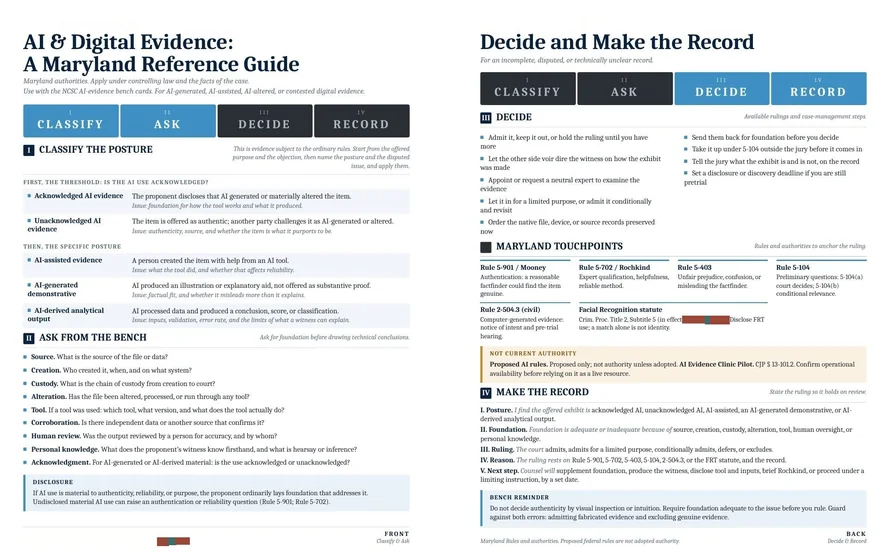
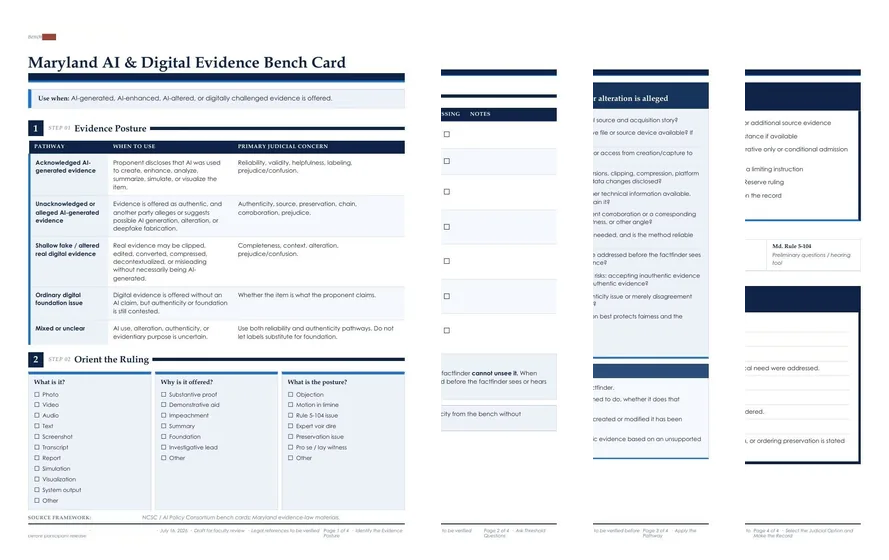
After: the front and back of the two-page Maryland reference guideBefore: the four pages of my first draft, built on the NCSC bench cards, with an evidence-posture table and checkbox grids

The guide: two pages, front and backWhere I started: my four-page first draft, built on the NCSC bench cards

The guideMy first draft

24pagespages
084checkboxescheckboxes
930questionsquestions
59record stemschecklist items
  1. Classify
  2. Ask
  3. Decide
  4. Record

DeliveredAutumn 2026

One day in traffic court

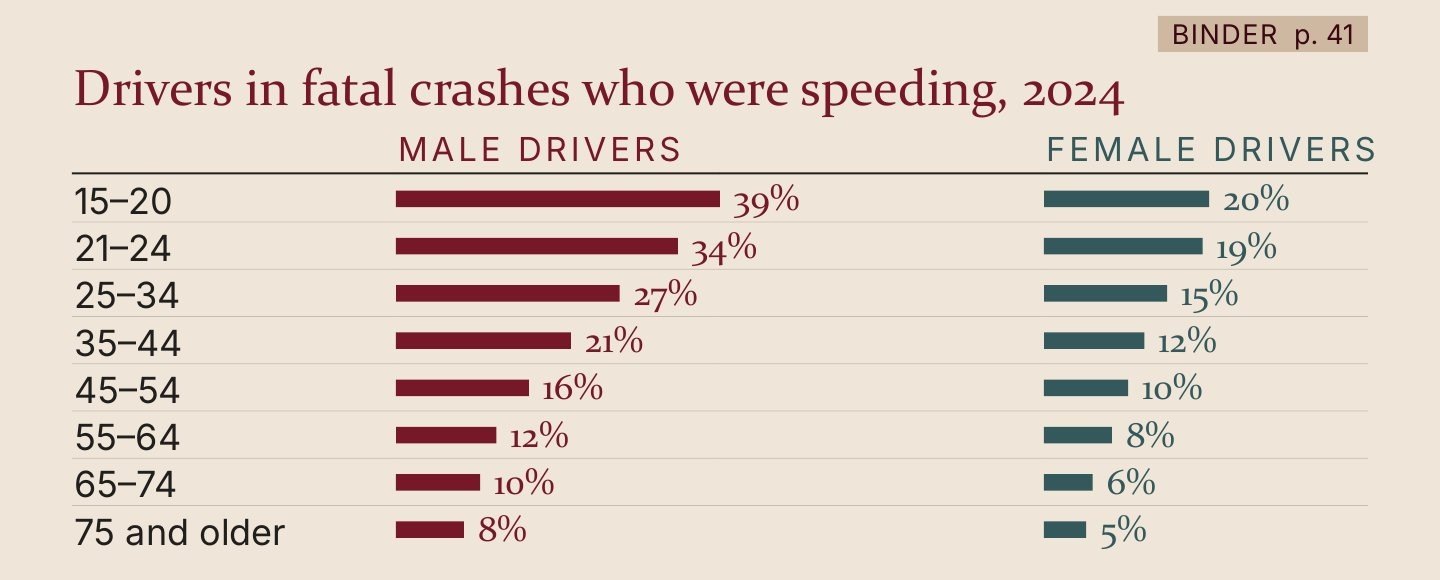
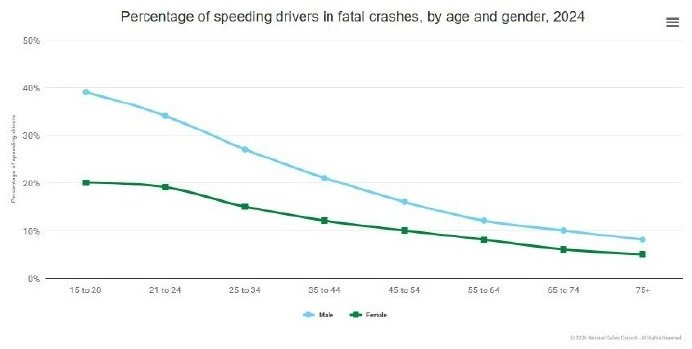
A one-day course for Maryland trial judges, with five presenters and 165 slides. A National Safety Council line chart became paired bars, male and female by age.

After: the slide that ran, drivers in fatal crashes who were speeding in 2024, as paired bars for male and female drivers by ageBefore: the National Safety Council line chart, percentage of speeding drivers in fatal crashes by age and gender, 2024

The slide that ranWhat came in: the National Safety Council's line chart

The percent of drivers in fatal crashes who were speeding, not the share of all drivers who speed. Source: NHTSA, Speeding: 2024 Data (DOT HS 813 823), Figure 1. The full series is on binder page 41.

DeliveredParticipant evaluationsSpring 2026

One family, all day: a family-law primer

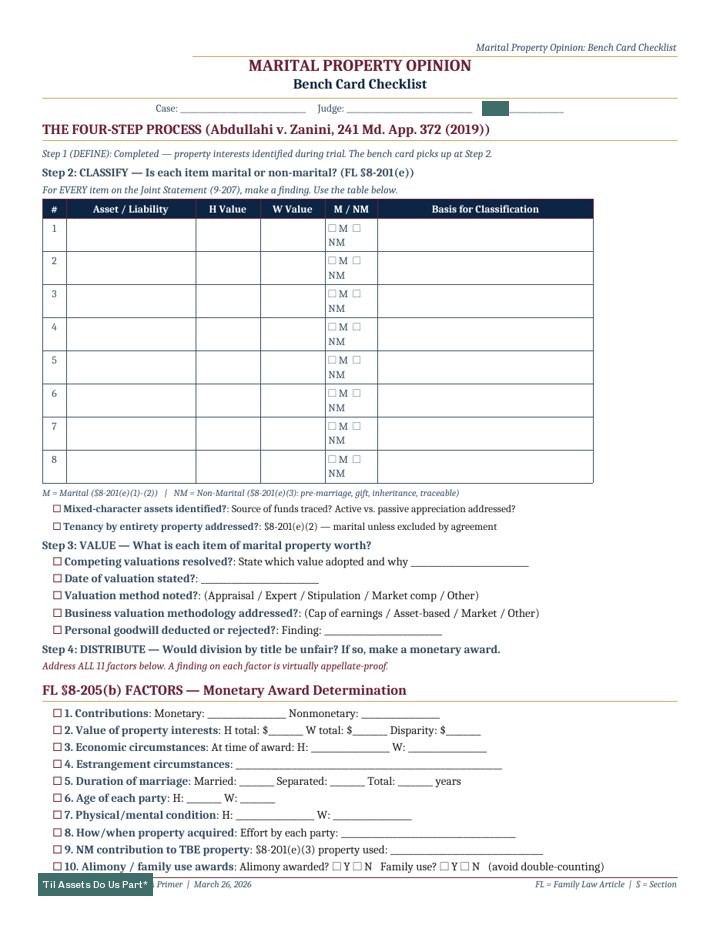
One family's case ran through the day and ended with the opinion-writing checklist. Twelve of the fifteen judges who answered said they intend to make it a high priority.

Page 1 of the opinion-writing checklist: the coordinating judge's list, built into two pages

Poster acceptedASC 2026, Chicago

52Jurisdictions.
Rules.
Open questions.

An Architecture of Absence

I started with a curriculum question: which states were threading equity through the law judges already study? I did not find that approach in the materials I reviewed. I almost gave up the research. Then I saw that jurisdictions without a mandate had arrived there in different ways. Thirteen of 52 jurisdictions mandate judicial training on bias, fairness and impartiality; 39 don't, for different reasons.

Open the study

  • 13 with a mandate
  • 39 without
MEAKWIVTNHWAIDMTNDMNILMINYMAORNVWYSDIAINOHPANJCTRICAUTCONEMOKYWVVAMDDEAZNMKSARTNNCSCDCOKLAMSALGAHITXFLUS
The 13: California, Colorado, Illinois, Iowa, Maryland, Minnesota, Missouri, New Jersey, New Mexico, New York, Oregon, Utah and Washington. US is the federal judiciary.

How I work with faculty and AI

  1. 01 · Faculty review

    Faculty review on one page

    My first tool for faculty review was a thirty-four question ballot with a hundred and eighteen radio buttons, which is to say I had asked sitting judges to do staff homework. I retired it and rebuilt it as one page that stated each decision and asked for a yes, a no or an edit. The 2026 simulation kit went out confirmed on that page.

    The review tool and its replacement, on the Comings and Goings page

  2. 02 · Design

    Two faculty decks, one livery

    I was sent two slide decks for one day of courses, and they had nothing in common. I rebuilt both on one livery: navy, mauve and sage.

    The Permanent Record: all 22 boards

  3. 03 · AI tools

    Slide Forge

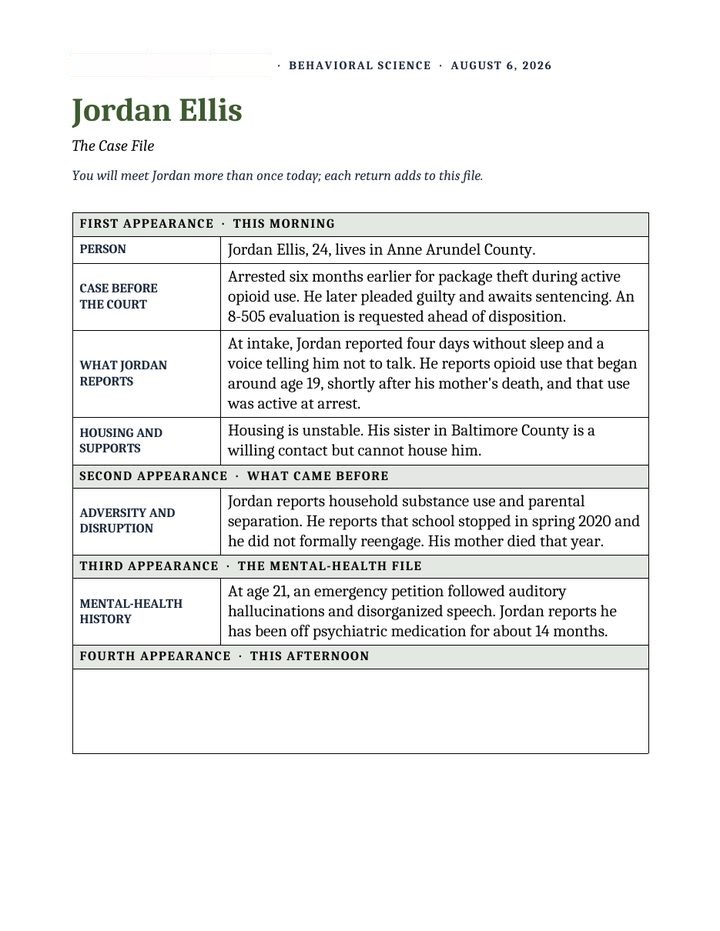
    Slide Forge is the AI slide program I wrote, and every faculty deck went through it. Most came out with better color, better fonts and ADA compliance. One deck was already well designed, and it came out flattened. I caught that checking the binder slide by slide.

    “Every time there's been an issue, it's become a gate. It's become a check. It's become a question.”

    What I said about my AI tools, autumn 2026

    The flattened deck, on the traffic course page

  4. 04 · Program records

    Fourteen courses, one status report

    One status report carried fourteen courses, each with its last confirmed step and its next one. After each planning call I kept a record of what was settled, what was proposed and what was still open.

    The status report and the planning records, on the program page

More of the work

  1. Fourteen courses, one status reportProgram management recordsOne status report, fourteen coursesThe faculty set the content. I kept the record, the calendar and the materials.
  2. Comings and Goings: a simulation for new judges The six station colors of the kit: Home, oat. Hotel, teal. Relative or friend, sienna. Shelter, oxblood. Your car, slate. Apartment, steel blue.PreparedRedesign, 2026I varied the starting quantities among the characters, so we can see that someone with a lot of money is going to have different options than somebody with no money but a lot of friends from work.
  3. Reference toolsPreparedFive courses, 2026Reference cards, guides and checklists from five courses, built from faculty materials first.
  4. The dramaturg: research for faculty planning a coursePreparedFaculty researchResearch binders and briefs for judge faculty before the planning calls, with the commissioned AI research checked against primary sources and the errors logged.
  5. How I work with AIActive workflowRecords on fileUnverified details stay visibly blank, claims are checked against primary sources, and faculty get rough drafts five to seven business days before print lock.
  6. Pathfinder: the partyRanMulti-agent editing pass, spring 2026I cast every agent in a multi-agent editing pass on my research as a class from Pathfinder, the tabletop game. “I gave agents very specific jobs and it worked really well,” until the cost and the gates caught up with it.
  7. The design rulesSpecifiedTraffic course deck, 2026Color roles, a type scale and the rules for building a slide, with measured contrast.
  8. Friends, Romans, Ninth GradersDeliveredAssessment resultsNinth-grade English, 2017Julius Caesar for 48 ninth graders over 22 classes, as lead teacher during my Johns Hopkins internship.
14courses
On one status report.
52jurisdictions
Coded for the Architecture of Absence study.
2024 to 2026
in judicial education
Working with the judges and lawyers who teach Maryland's judiciary.
English and theater,
2017 to 2024
Elementary to AP, and the high school and middle school theater programs I directed.

The work between the assignment and the day

Between a course assignment and the day it runs sits months of structural work: scoping learning objectives at Meeting Zero, writing decision sheets so faculty only weigh in on open calls, checking citations against primary sources, and building every slide deck and binder on one visual system. The color system isn't decoration; it's orientation. A judge teaching in three of my courses could tell which one we were discussing from the livery of the packet in front of her. See the design rules.

About

Formally, I'm Alexander Karsh. But when you call me, you can call me Al.

From 2024 to 2026, I managed judicial education programs and designed curriculum with the judges and lawyers who teach Maryland's judiciary. Before that, I spent seven years teaching English and running theater programs.

About the work

Judges and faculty own the law and the clinical substance. I own the learning architecture, the practice mechanics and the tools that make it usable.

Names of judges, faculty and staff are barred. Course titles are invented stand-ins, dates are rounded to the season, and the college goes unnamed. Think of it as witness protection for curriculum.