If you're hiring forAlexander Karsh
Getting busy experts to adopt new practice
Judges and lawyers taught these courses on top of full dockets. Getting them to adopt new instructional formats meant lowering their prep burden while protecting their authority over every legal call. These four pages show the biweekly status and decision-sheet system across fourteen courses, the cue-to-cue and research packets I built before faculty taught, the verification and review window I built for AI-assisted drafts, and one delivered course built around a returning case. The course evaluations record what participants reported afterward, not what they later changed on the bench.
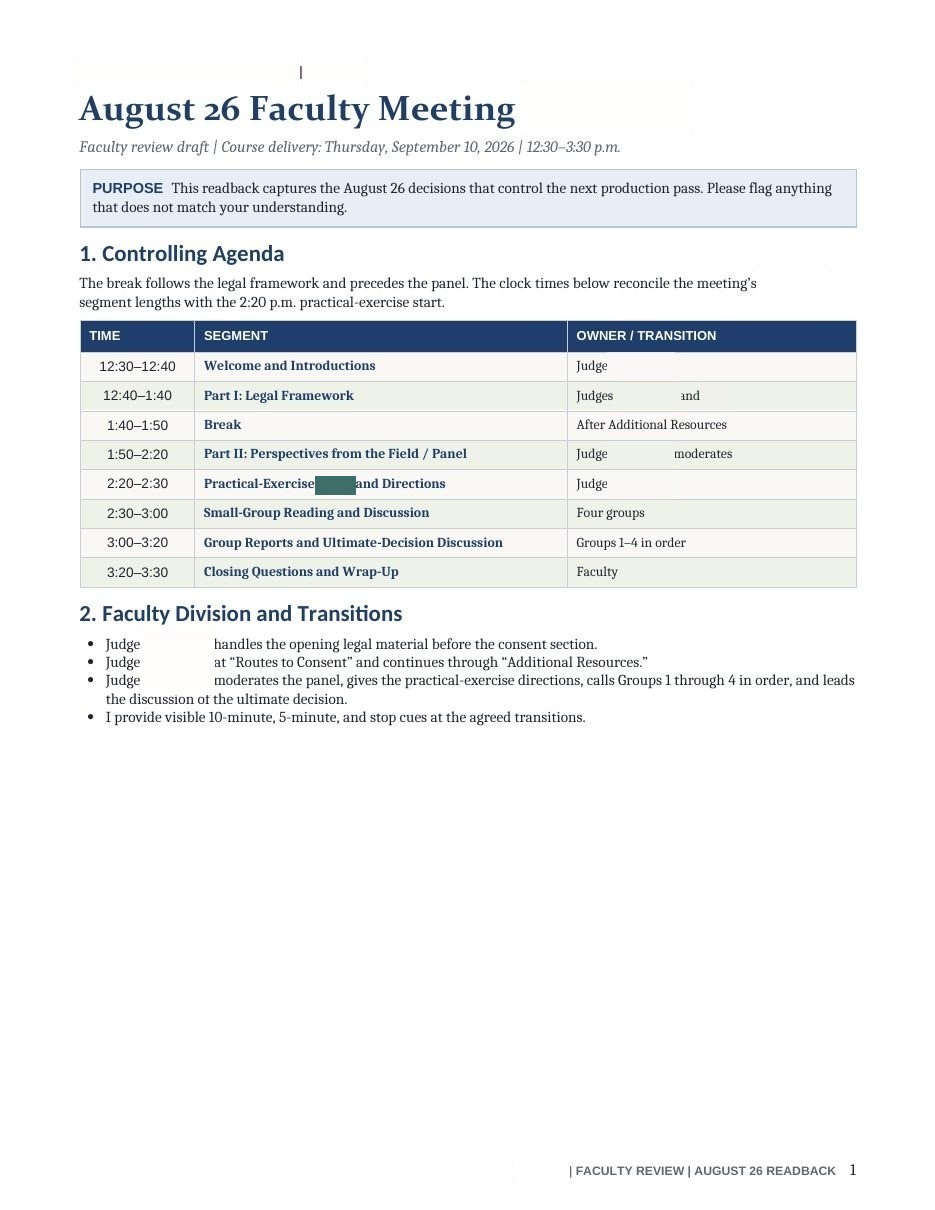
Fourteen courses, one status report
The status report went out every other Wednesday with the same milestones for every course, and after each planning call a readback listed what was settled, what was proposed and what was still open.
Open the case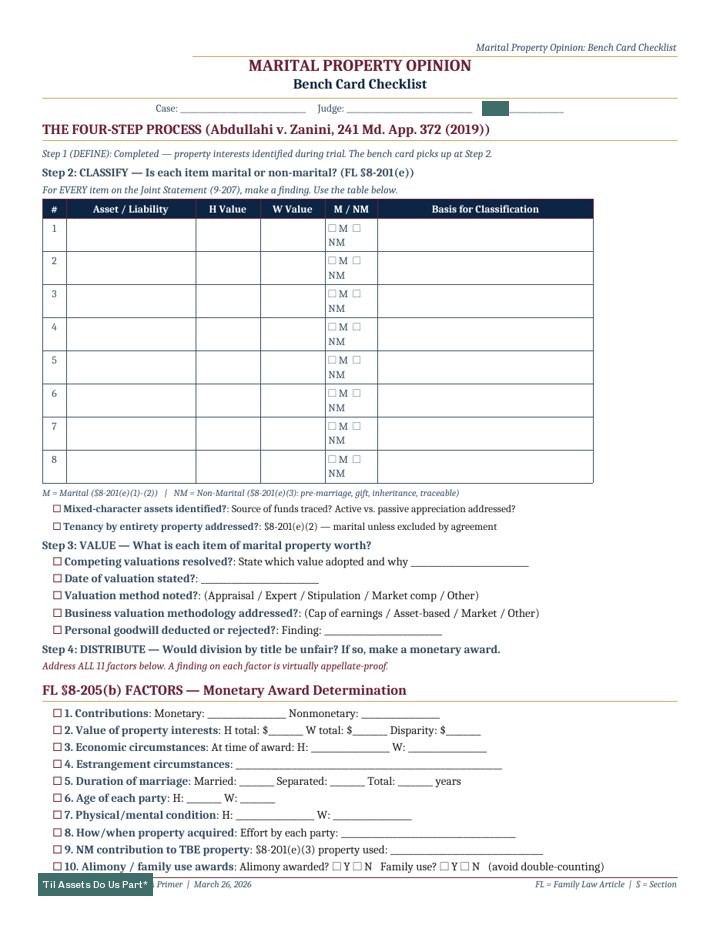
One family, all day: a family-law primer
One family's case ran through the day and ended with the opinion-writing checklist. Twelve of the fifteen judges who answered said they intend to make it a high priority.
Open the case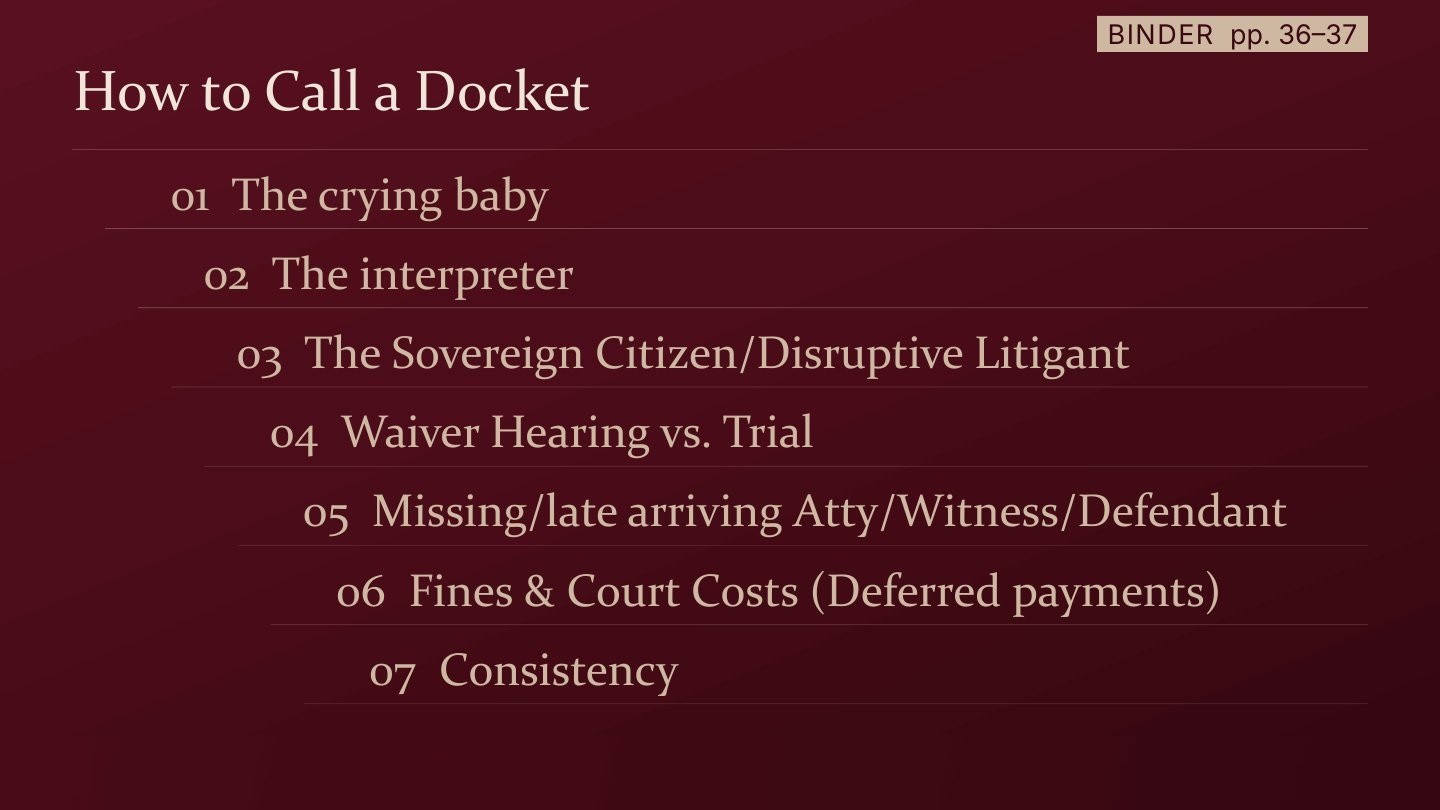
Traffic court: five presenters, one run of show
The faculty's priority was the confusion around the new reckless-driving law, and the agenda had no room for a section on that law. I put it into the opening polls. The deck, the binder and the run of show are here.
Open the case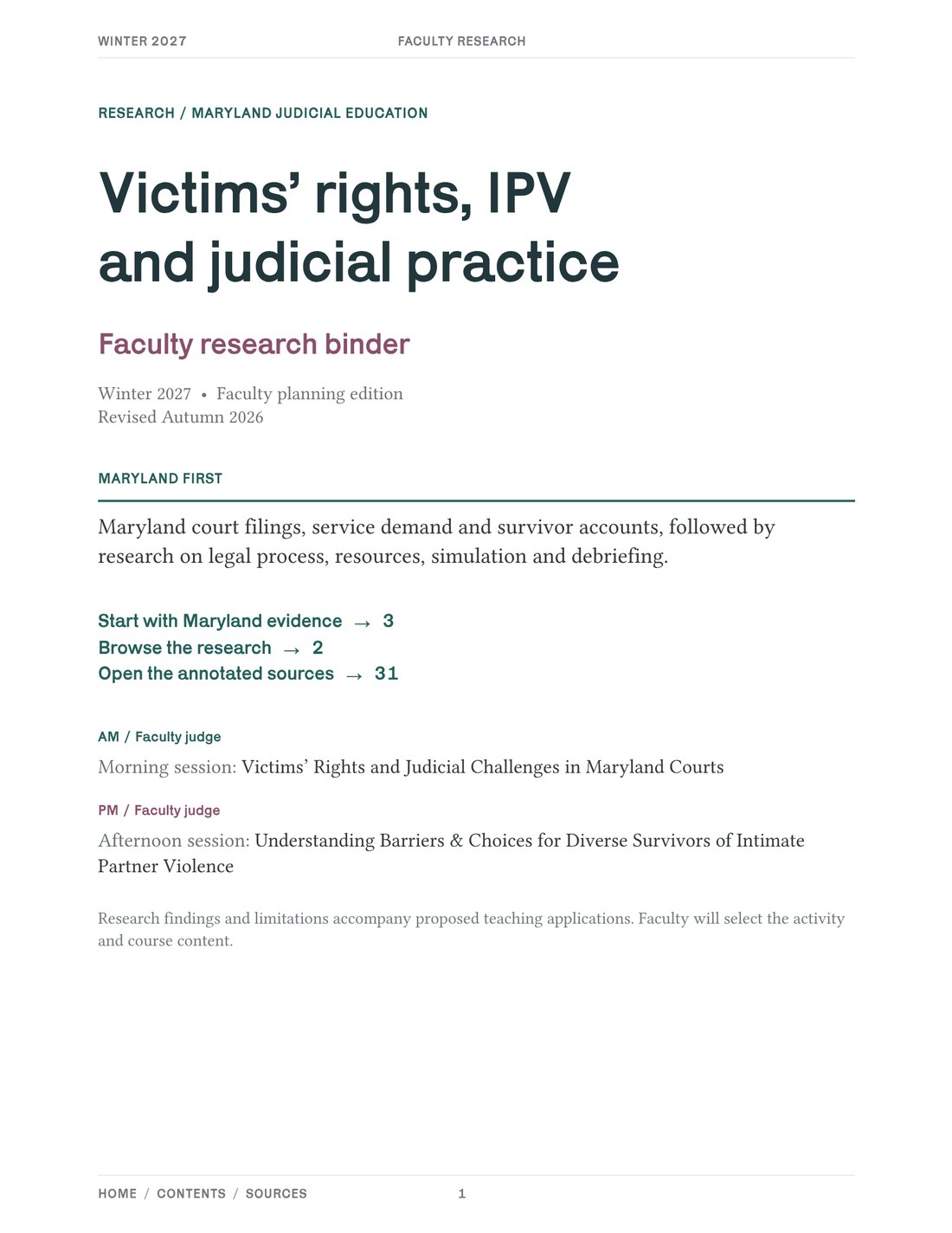
The dramaturg: research for faculty planning a course
Research binders and briefs for judge faculty before the planning calls, with the commissioned AI research checked against primary sources and the errors logged. The faculty decided what went in the course, working from these binders and briefs.
Open the packets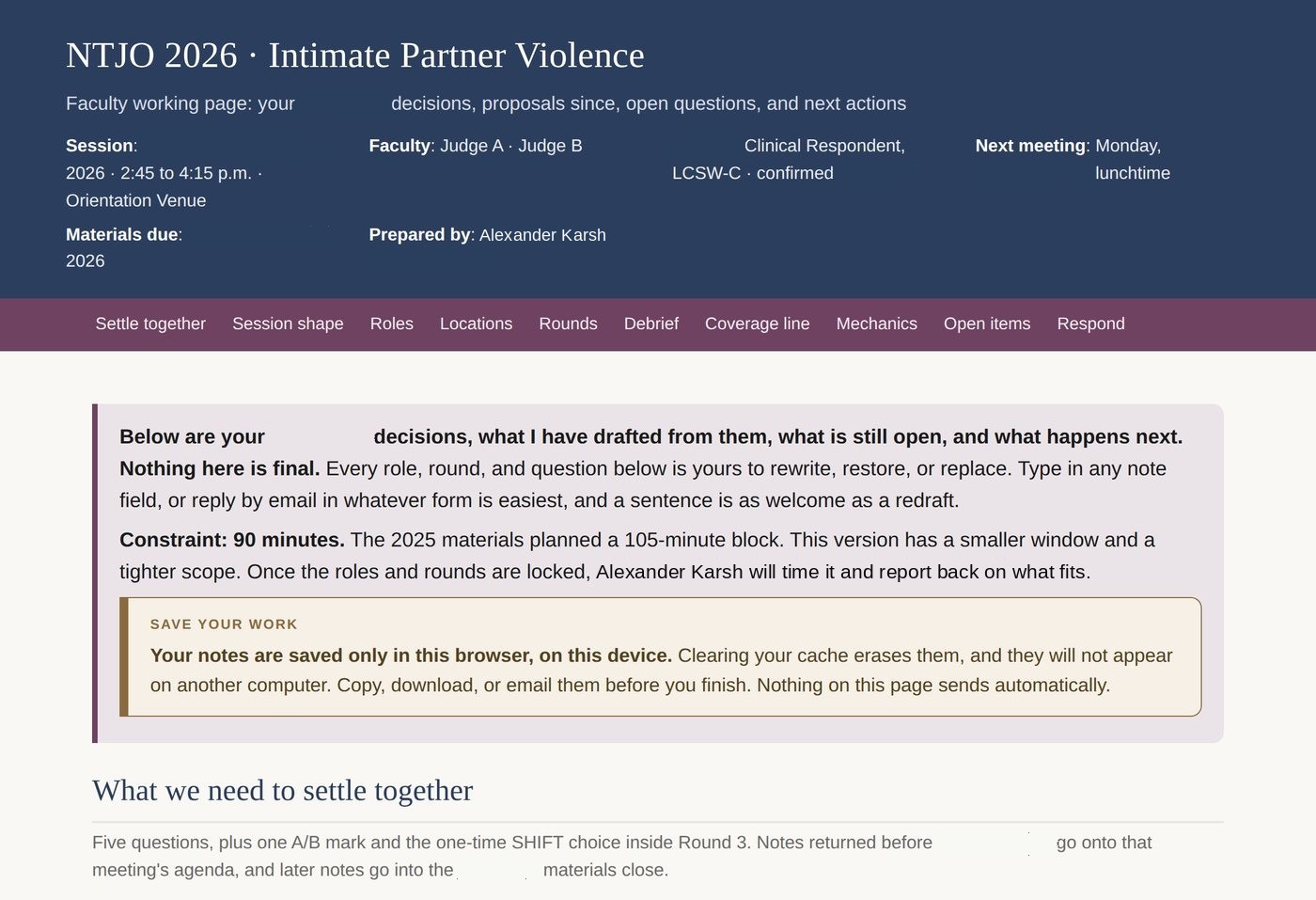
How I work with AI
I use AI to synthesize research, stress-test course mechanics, and audit decks against faculty requests under strict verification gates. Unverified details stay visibly blank, claims are checked against primary sources, and faculty get rough drafts five to seven business days before print lock.
Open the page