If you're hiring forAlexander Karsh
Curriculum built with experts
Judges and faculty own the legal and clinical doctrine. I design the learning architecture: the objectives, the sequence, the practice mechanics and the bench tools that make the material usable under pressure. These four cases show the structures I built, the options I put in front of faculty, and the decisions they made inside them. I've marked the status and evidence for each piece.
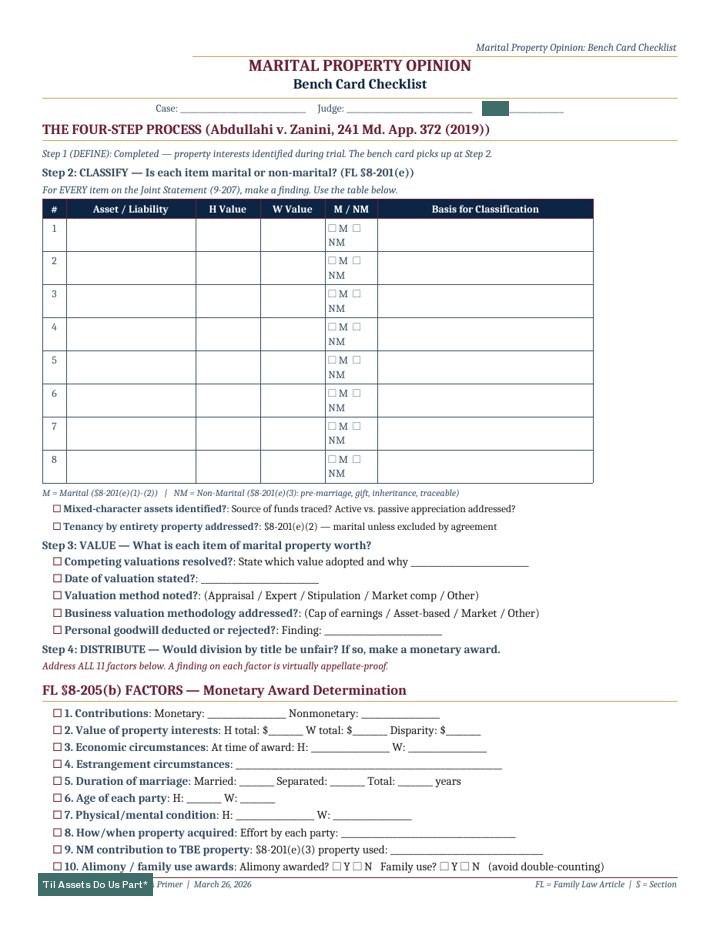
One family, all day: a family-law primer
One family's case ran through the day and ended with the opinion-writing checklist. Twelve of the fifteen judges who answered said they intend to make it a high priority.
Open the case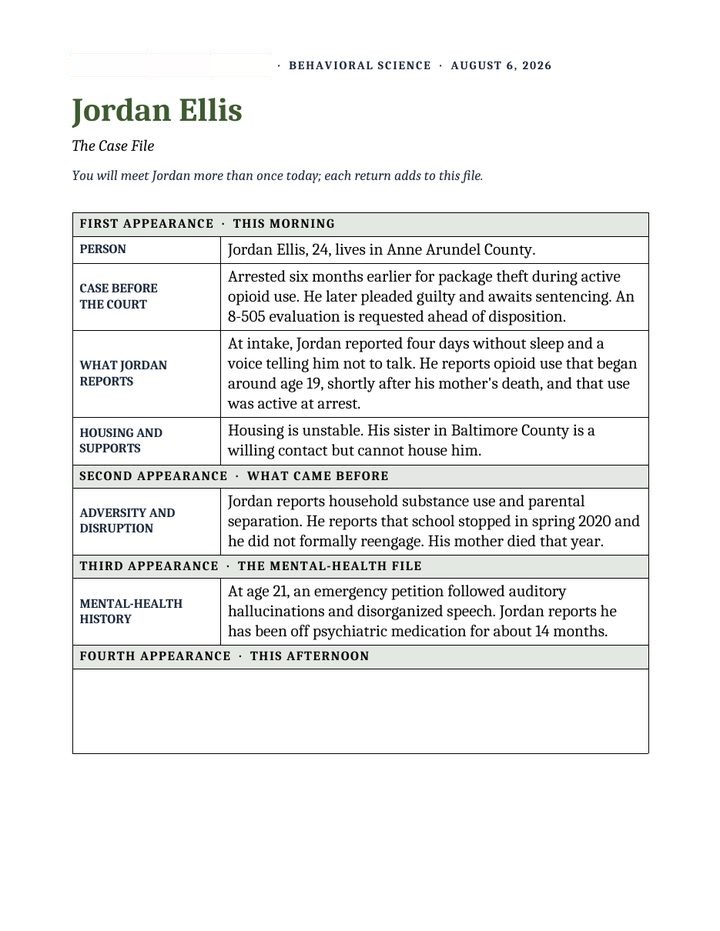
A one-day behavioral science course for judges
One fictional defendant came back after every block, with one new layer in his file.
Open the case study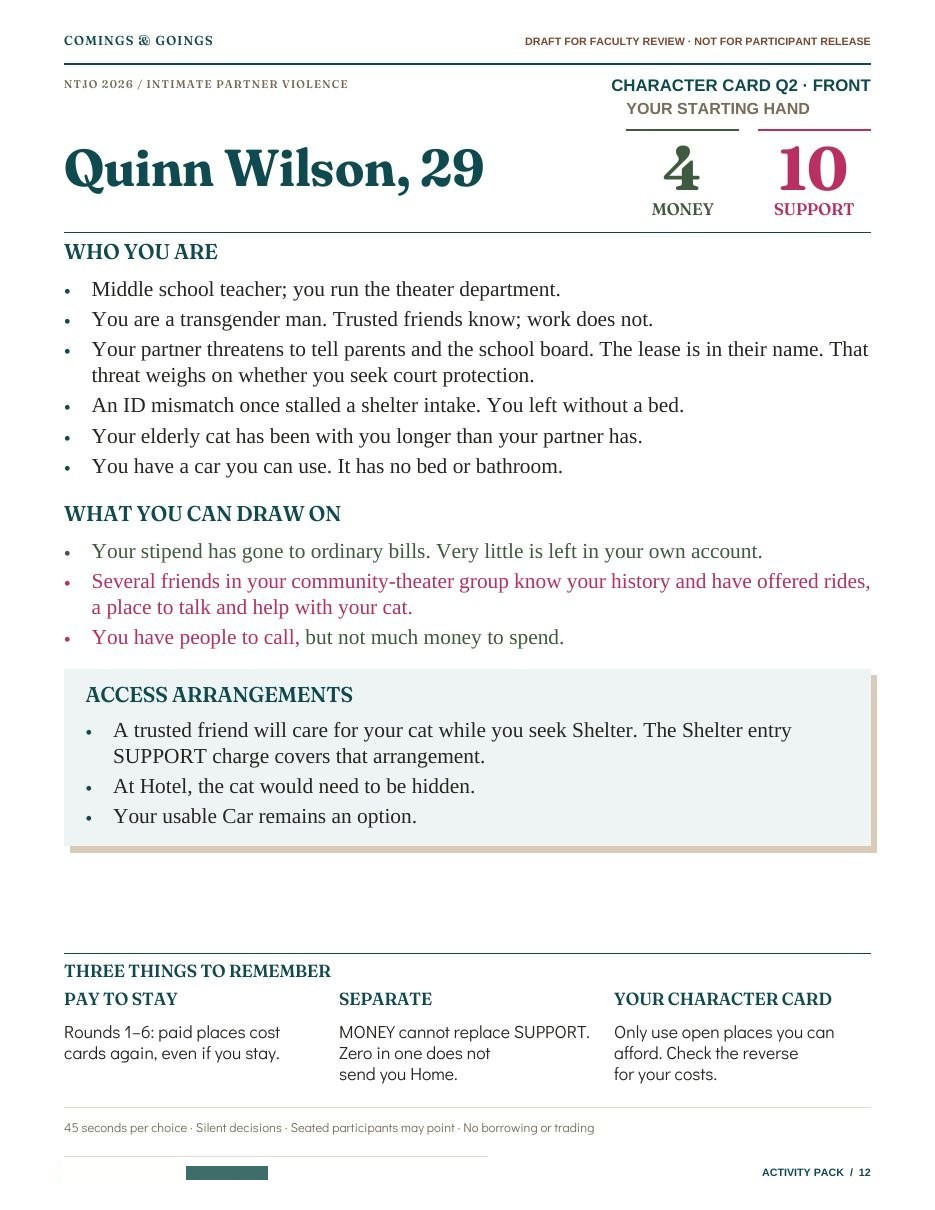
Comings and Goings: a simulation for new judges
What I designed and gave the faculty as a choice was to keep the three characters and vary their starting resources. Someone with a lot of money is going to have different options than somebody with no money but a lot of friends from work.
Open the case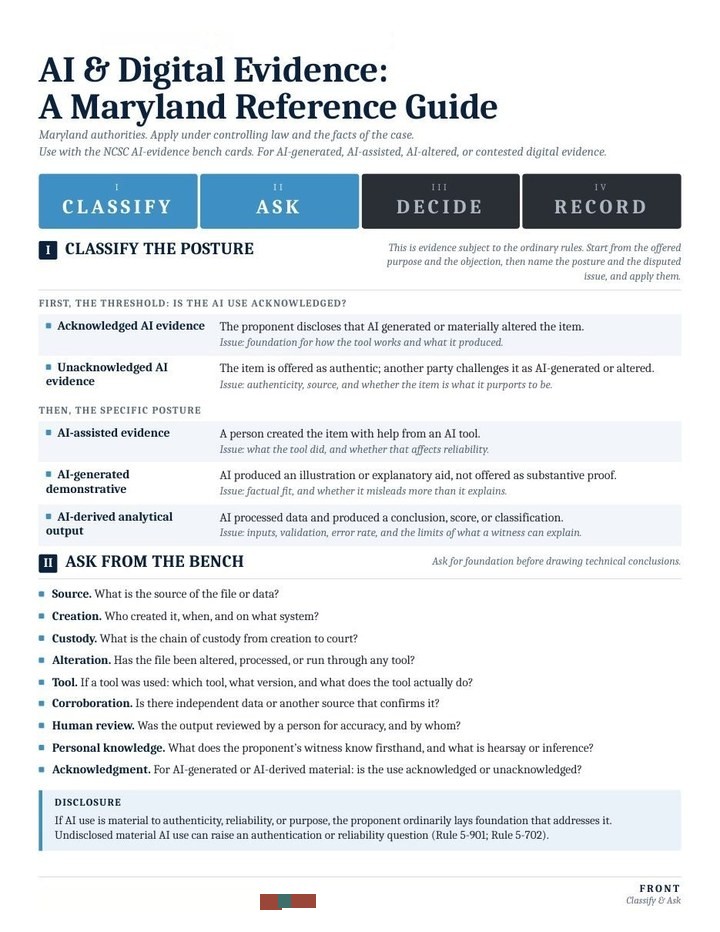
The AI-evidence reference guide
I built the guide from the faculty's materials and the national bench cards, and added sentence stems because the cards had nothing for judges to say.
Open the caseAll the workNext route: getting busy experts to adopt new practice