PreparedNew-judge orientation simulation, November 2026
Faculty working page: the intimate partner violence simulation
A working page I sent the two judges and the clinical respondent to mark up, for the simulation planned for the November 2026 orientation. It lays out the composite roles, the locations, eight rounds, the debrief and the mechanics as proposals: nothing in it is final. It cites no published research, so what it states as fact are the teaching notes under each round.
The packet
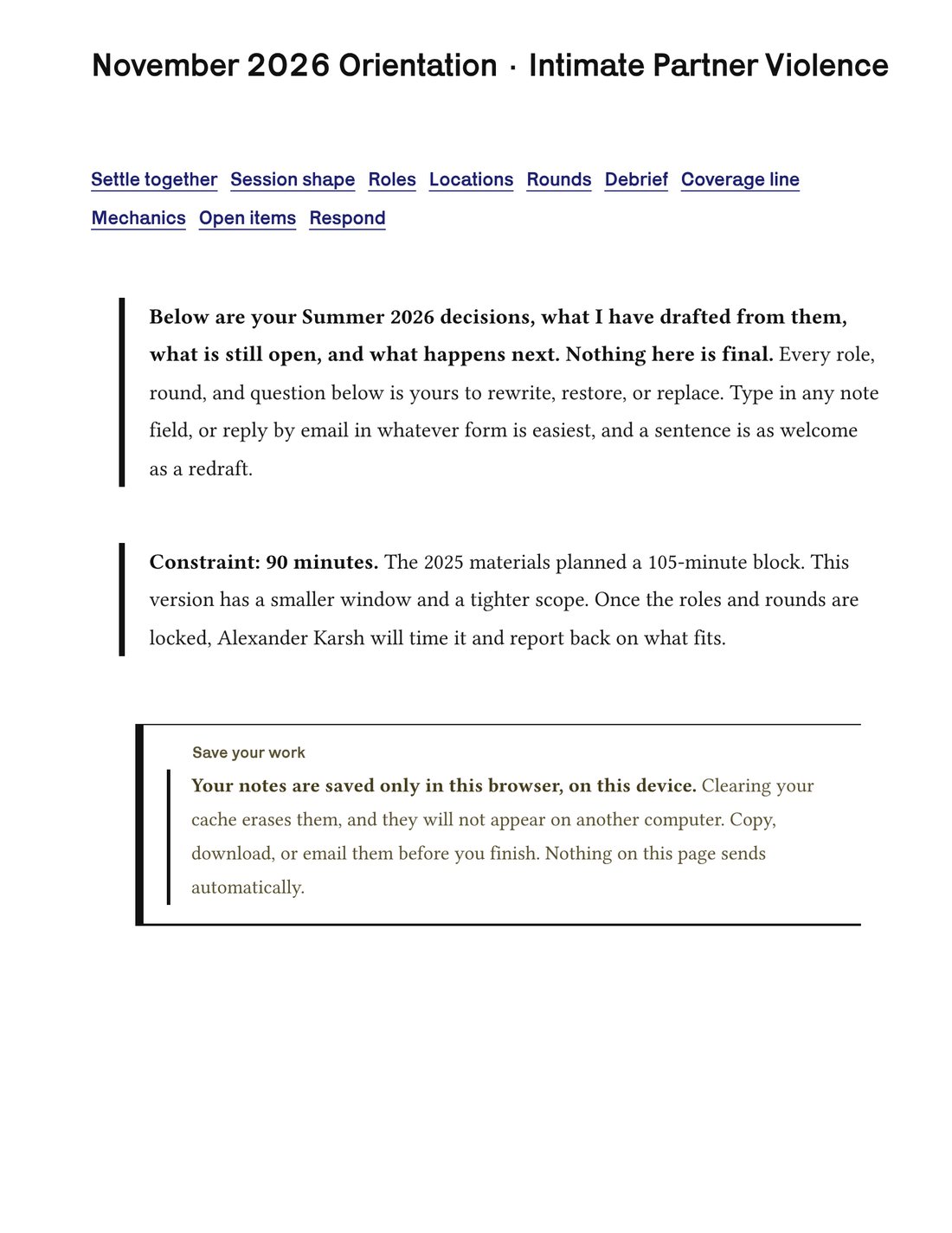 Page 1
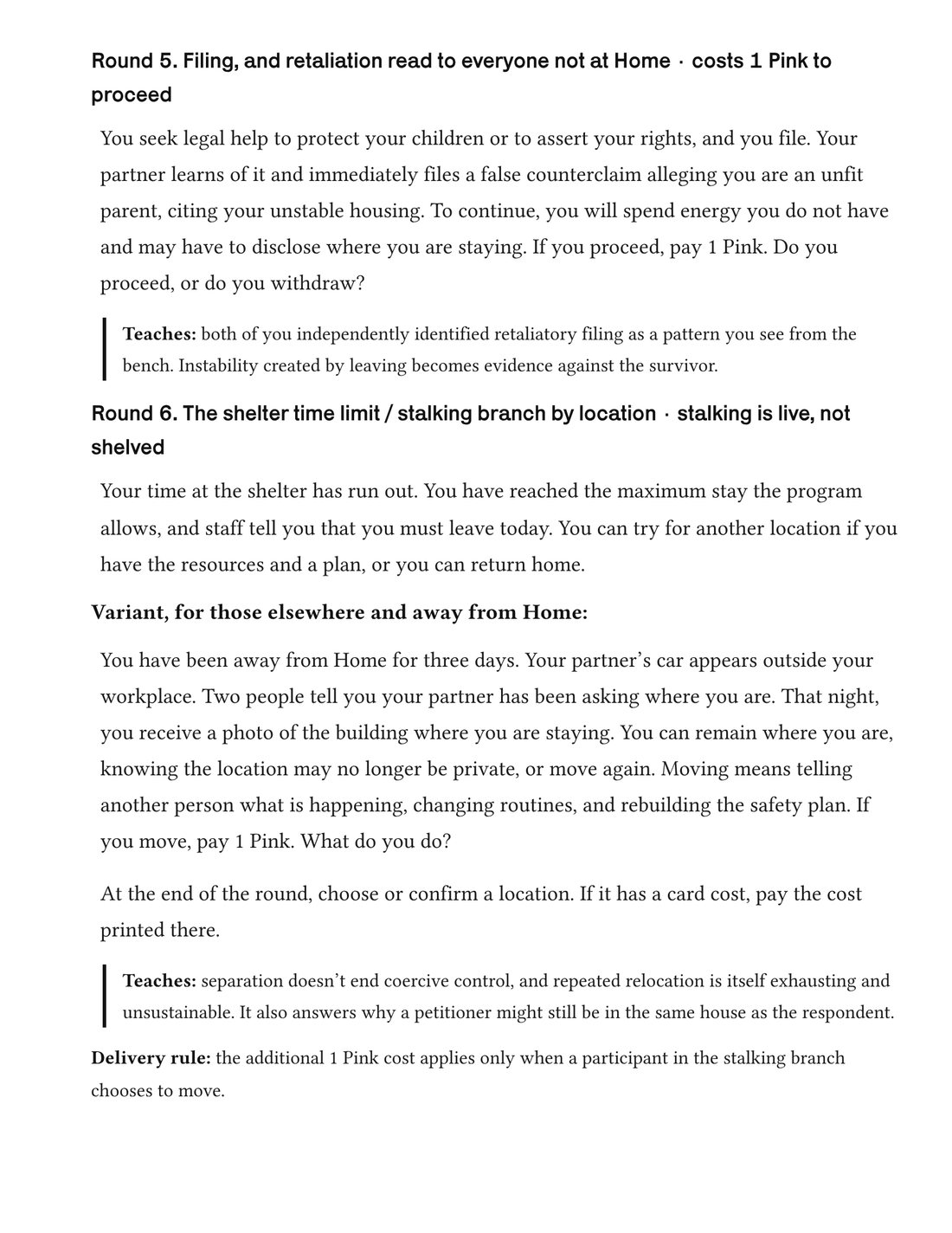
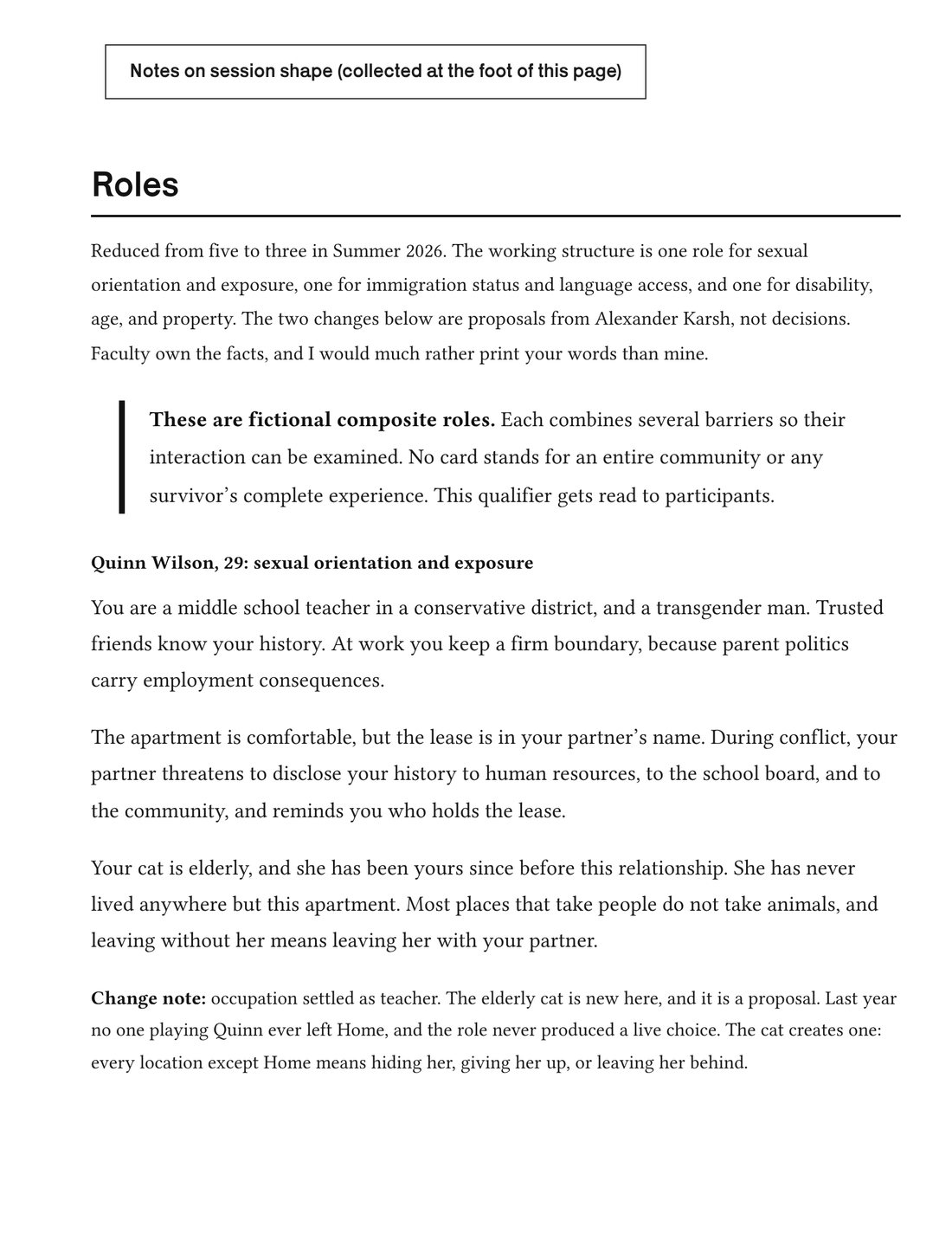 Page 6
Rebuilt for this portfolio from the packet as sent. The words are the packet’s own: roles stand in for names, A State Judicial Institute for the college, and seasons for exact dates.
“Oh my gosh, […] you have gotten even more detailed with your stuff. Like, the stuff you sent, I was just like… […] It’s amazing! I mean, it’s amazing!”
What the research says, and where it went
- Teaching note
Coercive control often starts without physical violence, and early records rarely show it
“Teaches: coercive control patterns frequently begin without physical violence and rarely appear in early records.”
Page 11 · No source cited on the page
Where it shows upRound 1 and the start of Round 2, as drafted“This is the first time you have felt compelled to cut off your social time because of your partner. [...] Months later an argument turns physical”
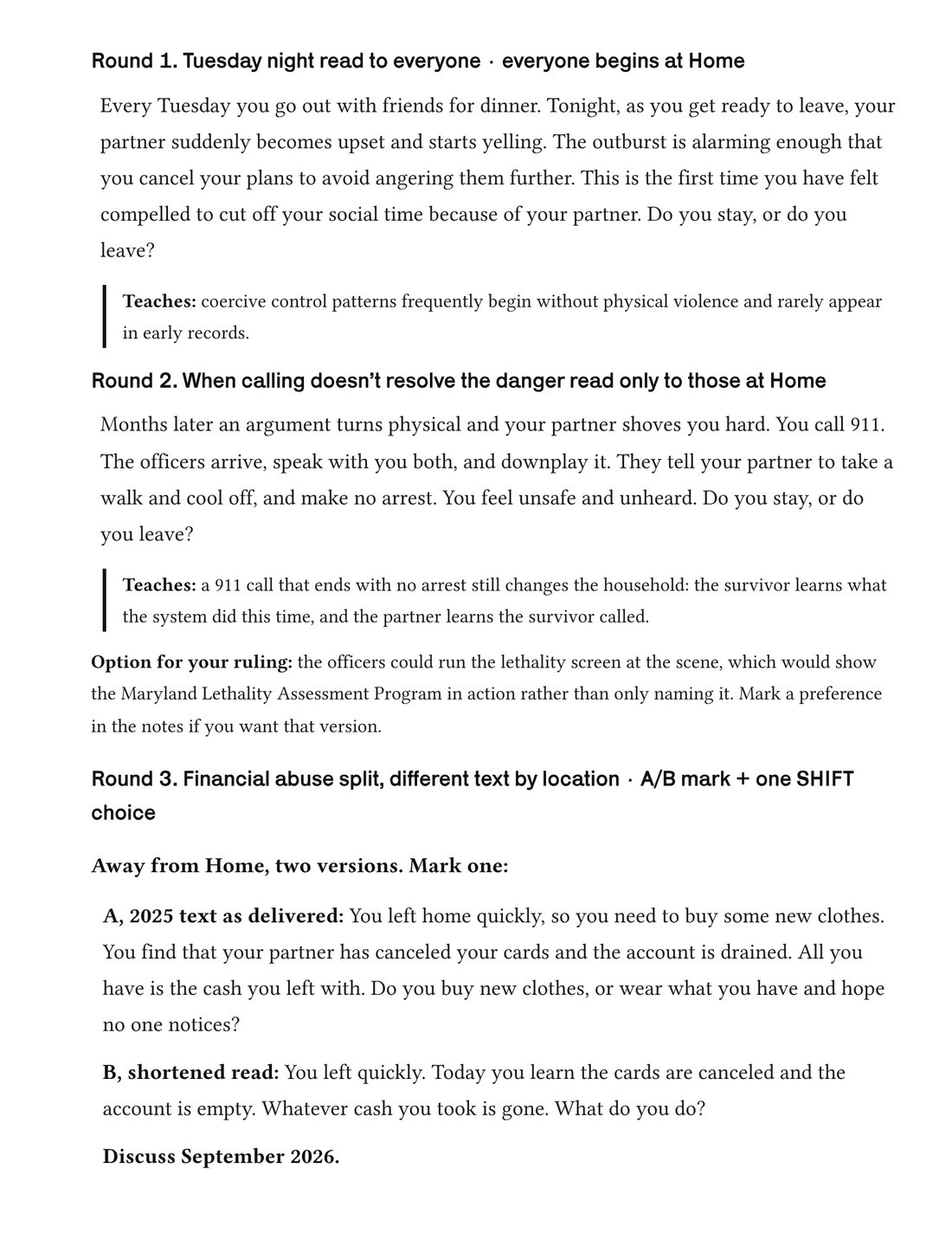 Page 11
- Teaching note
Financial abuse often leaves the first paper trail in a case
“Teaches: financial abuse often produces the first documentary evidence in a case: canceled cards, emptied accounts, threat messages. It also prices ordinary paid work: the shift pays Green and costs Pink.”
Page 12 · No source cited on the page
Where it shows upRound 3, the financial-abuse split, as drafted“You find that your partner has canceled your cards and the account is drained. All you have is the cash you left with.”
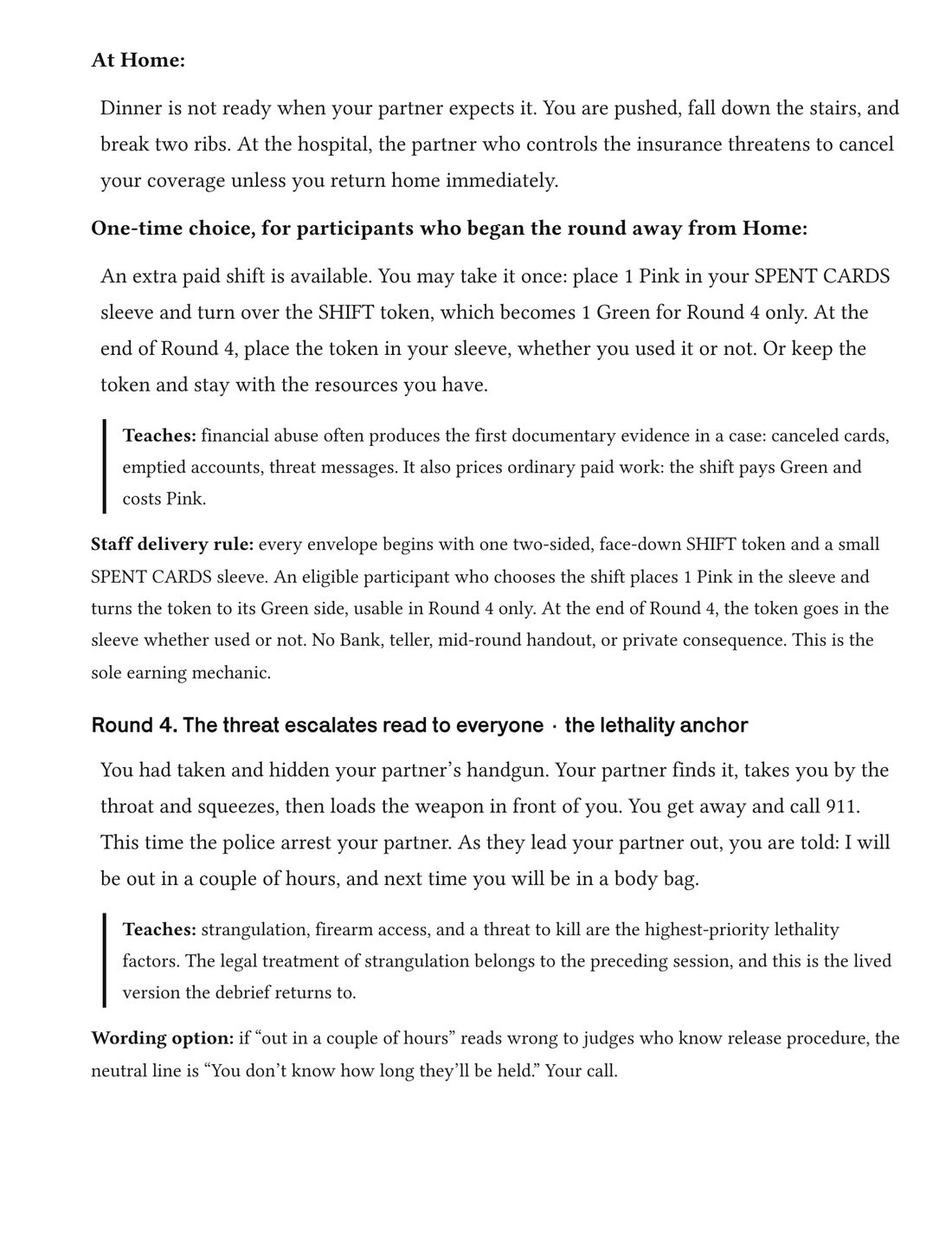 Page 12
- Teaching note
Strangulation, firearm access and a threat to kill rank highest for lethality
“Teaches: strangulation, firearm access, and a threat to kill are the highest-priority lethality factors. The legal treatment of strangulation belongs to the preceding session, and this is the lived version the debrief returns to.”
Page 12 · No source cited on the page
Where it shows upRound 4, the threat escalates, as drafted“Your partner finds it, takes you by the throat and squeezes, then loads the weapon in front of you.”
Page 12 - Teaching note
Separation doesn’t end coercive control, and moving again and again is exhausting
“Teaches: separation doesn’t end coercive control, and repeated relocation is itself exhausting and unsustainable. It also answers why a petitioner might still be in the same house as the respondent.”
Page 13 · No source cited on the page
Where it shows upThe card back’s table of what each round changes“ROUND 6 Shelter starters leave without moving charge; otherwise, moving to a different non-Home place costs +1 SUPPORT.”
 Page 13
- Teaching note
Risk rises at separation, and threats run through children, pets and family
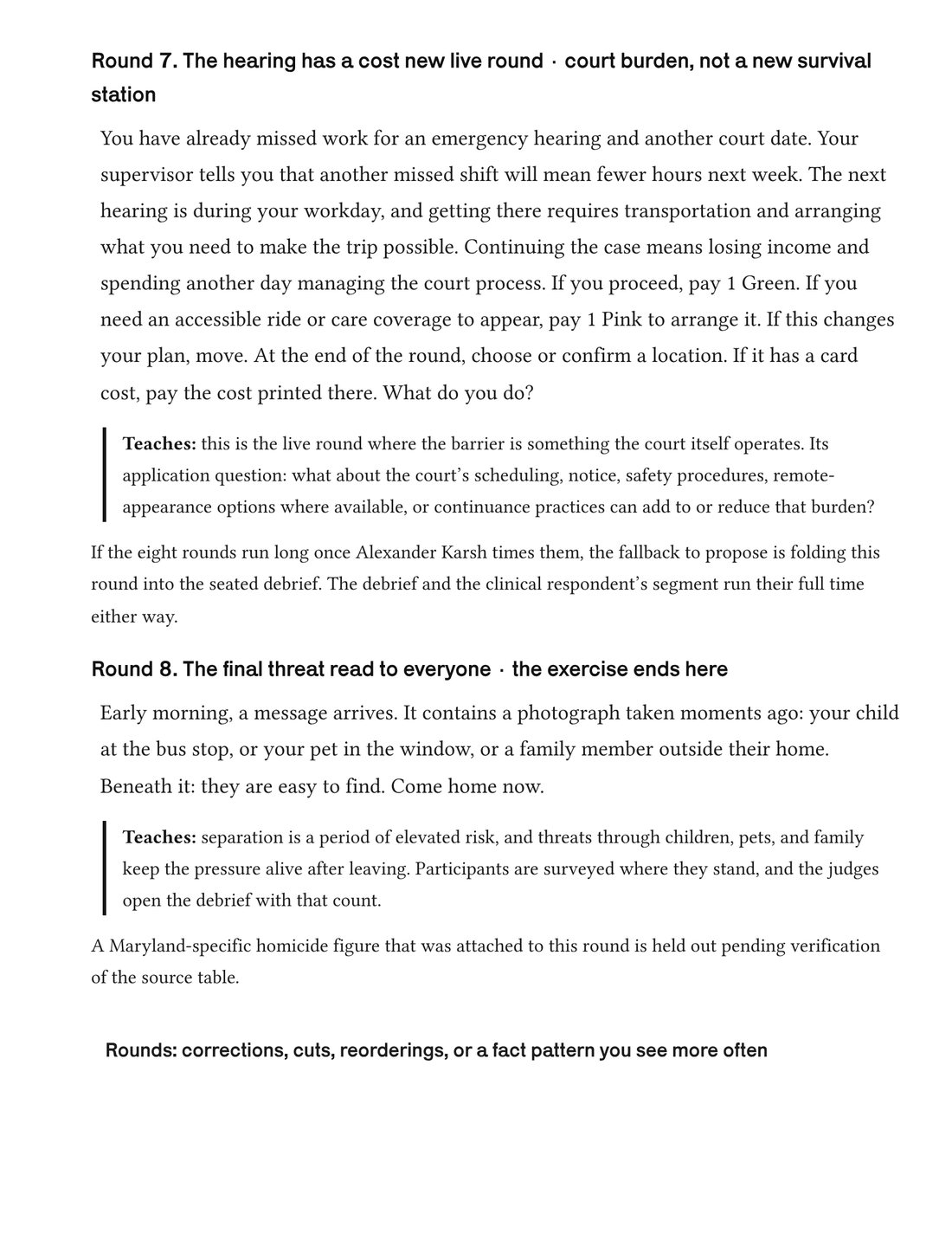
“Teaches: separation is a period of elevated risk, and threats through children, pets, and family keep the pressure alive after leaving. [...] A Maryland-specific homicide figure that was attached to this round is held out pending verification of the source table.”
Page 14 · No source cited on the page. It holds out a Maryland homicide figure until its source table could be checked
Where it shows upThe facilitation guide, before the envelopes open“The content includes coercive control, physical violence, strangulation, firearm threats and threats involving loved ones.”
 Page 14