PreparedAI and digital evidence course, summer 2026
Research brief: facial recognition, AI bias and judicial education
A brief I wrote for the coordinating judge of the summer AI and digital evidence course. It proposes one learning outcome: judges recognize the documented differences in how facial recognition and AI identification tools perform across demographic groups, and weigh them when they evaluate expert testimony. It lays out the evidence and three documented wrongful-arrest cases, then shows where the content would thread through the day.
The packet
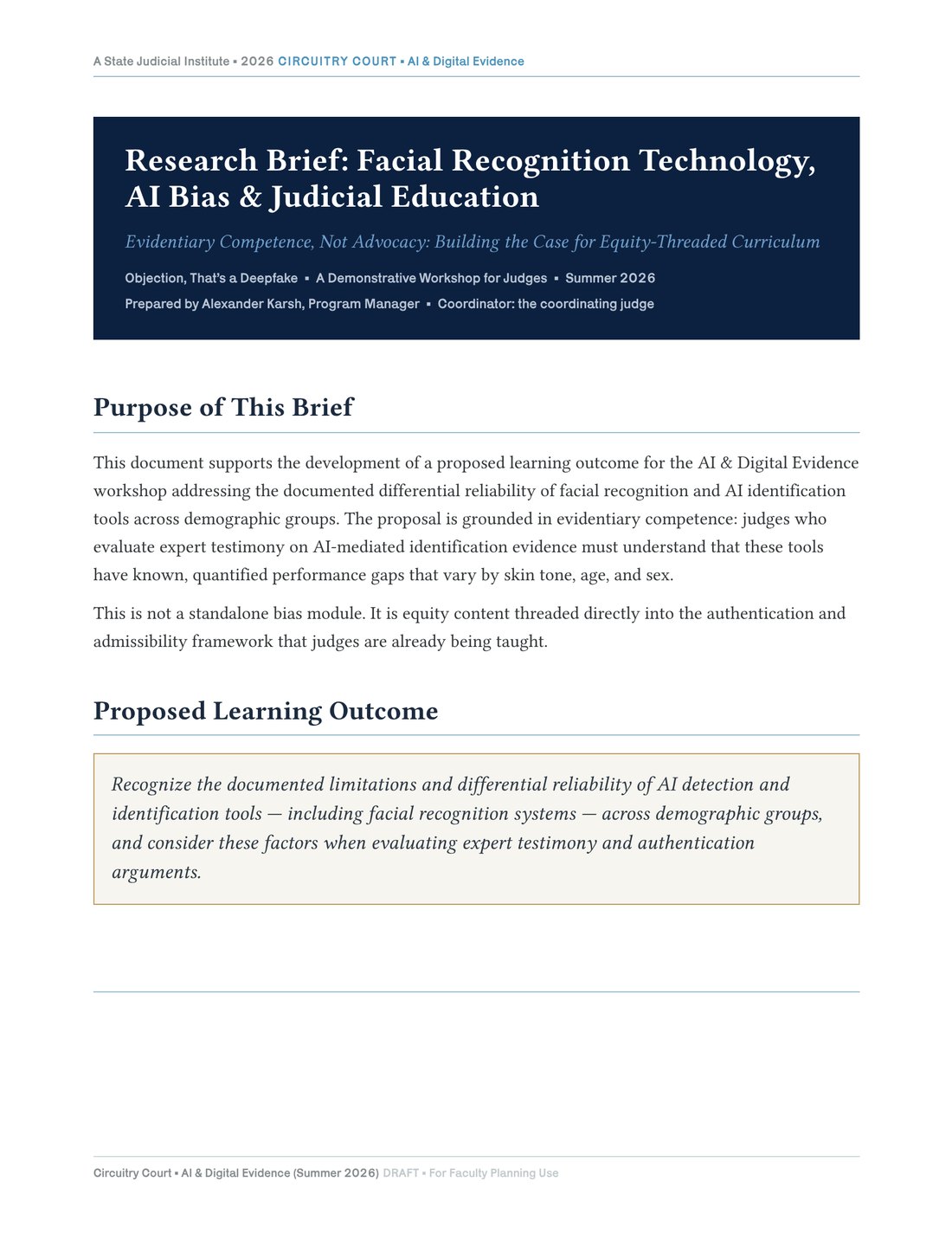 Page 1
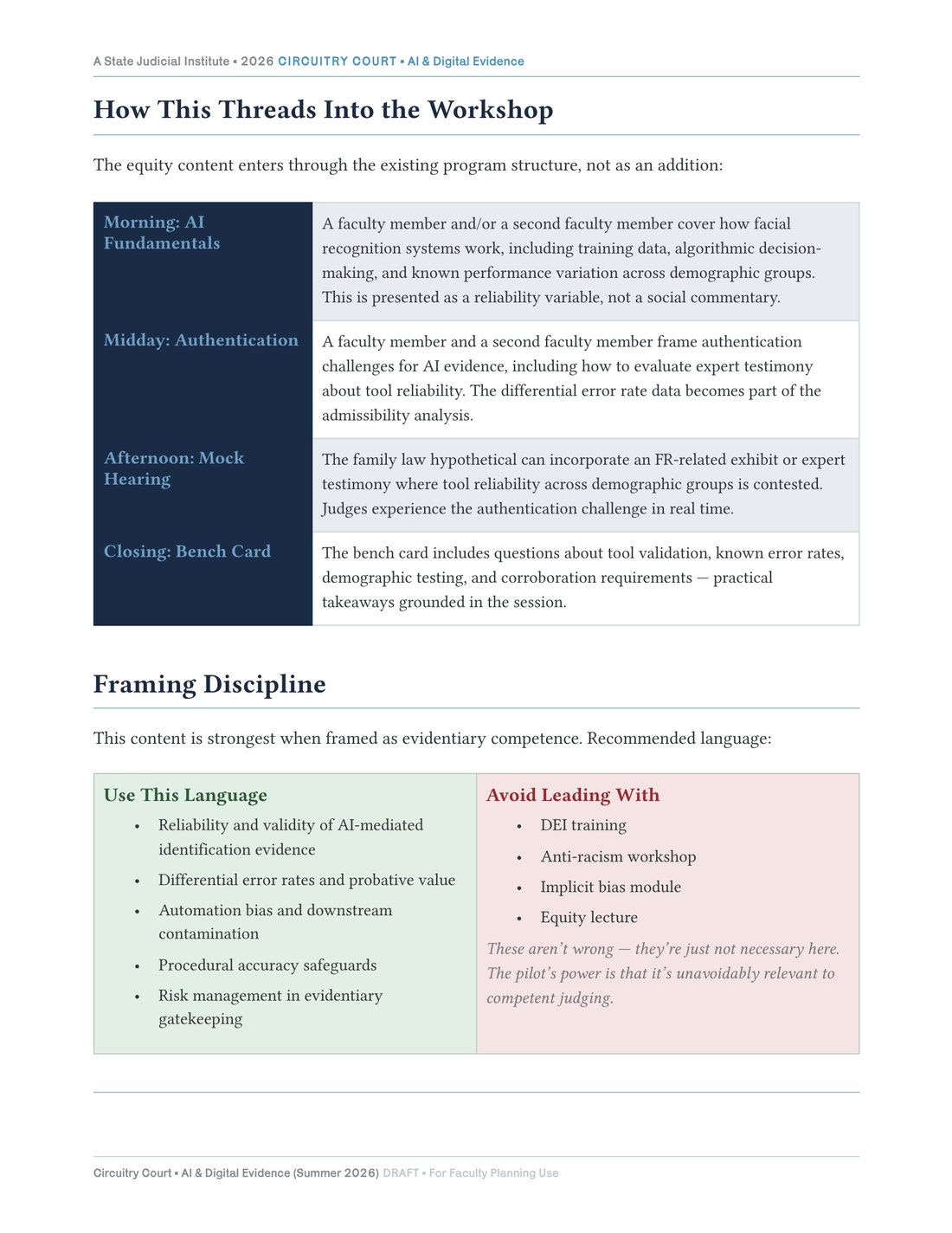 Page 4
Open the whole packet. Rebuilt for this portfolio from the packet as sent. The words are the packet’s own: roles stand in for names, A State Judicial Institute for the college, and seasons for exact dates.
What the research says, and where it went
- On record
Federal testing records more false matches for some groups than others
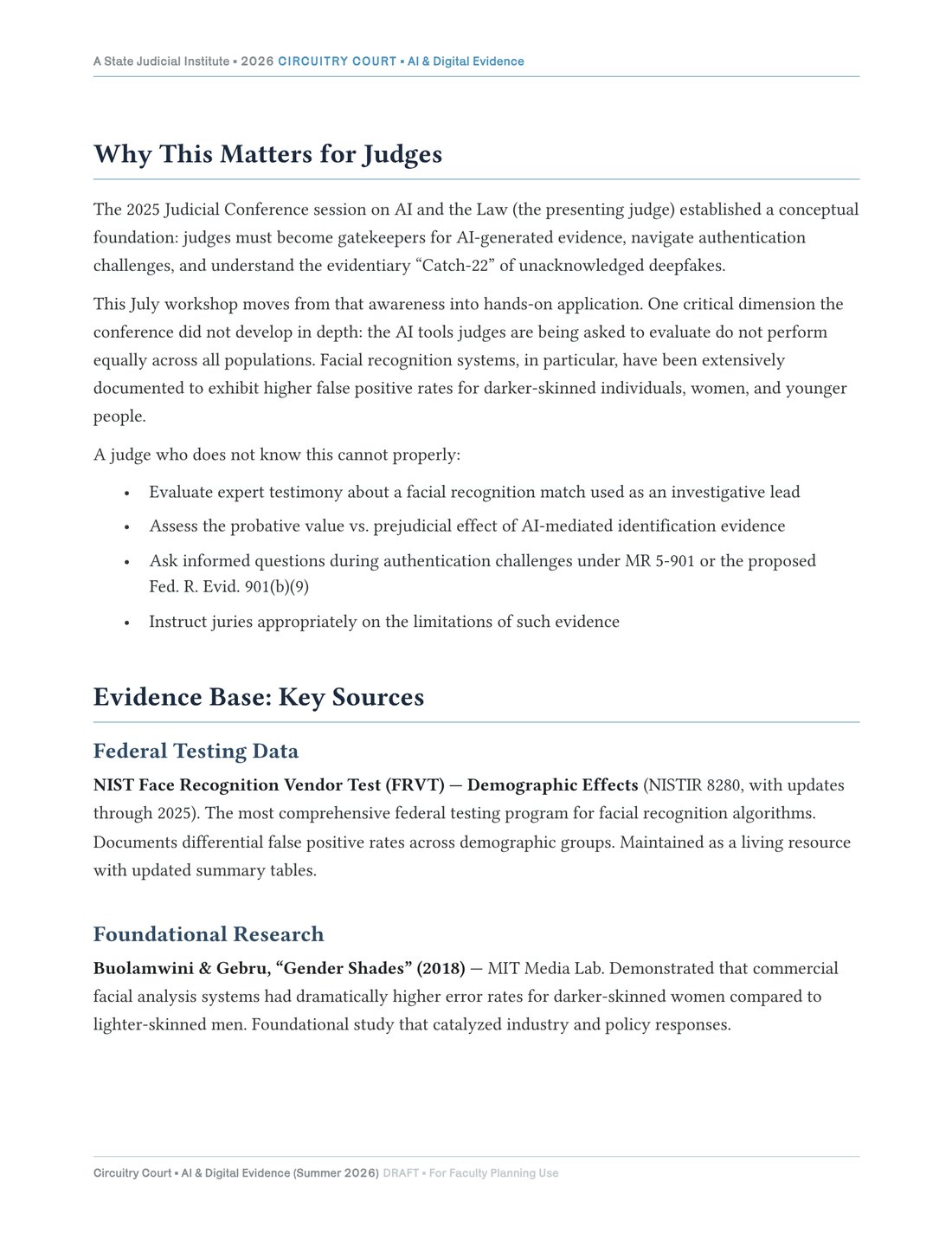
“NIST Face Recognition Vendor Test (FRVT) — Demographic Effects (NISTIR 8280, with updates through 2025). The most comprehensive federal testing program for facial recognition algorithms. Documents differential false positive rates across demographic groups. Maintained as a living resource with updated summary tables.”
Page 2 · NIST Face Recognition Vendor Test, Demographic Effects (NISTIR 8280, with updates through 2025)
Where it shows upThe proposed midday block on authentication“The differential error rate data becomes part of the admissibility analysis.”
 Page 2
- Studies show
Commercial face analysis erred far more on darker-skinned women
“Buolamwini & Gebru, “Gender Shades” (2018) — MIT Media Lab. Demonstrated that commercial facial analysis systems had dramatically higher error rates for darker-skinned women compared to lighter-skinned men. Foundational study that catalyzed industry and policy responses.”
Page 2 · Buolamwini & Gebru, “Gender Shades” (2018), MIT Media Lab
Where it shows upThe proposed morning block on AI fundamentals“This is presented as a reliability variable, not a social commentary.”
Page 2 - Studies show
Legal analysis flags compounding human and machine error
“Georgetown Law Center on Privacy & Technology — “The Perpetual Line-Up” (scope of law enforcement facial recognition networks) and “A Forensic Without the Science” (courtroom-facing reliability critique, including compounding human + machine error).”
Page 3 · Georgetown Law Center on Privacy & Technology, “The Perpetual Line-Up” and “A Forensic Without the Science”
Where it shows upBackground for faculty. It isn’t tied to one part of the activity.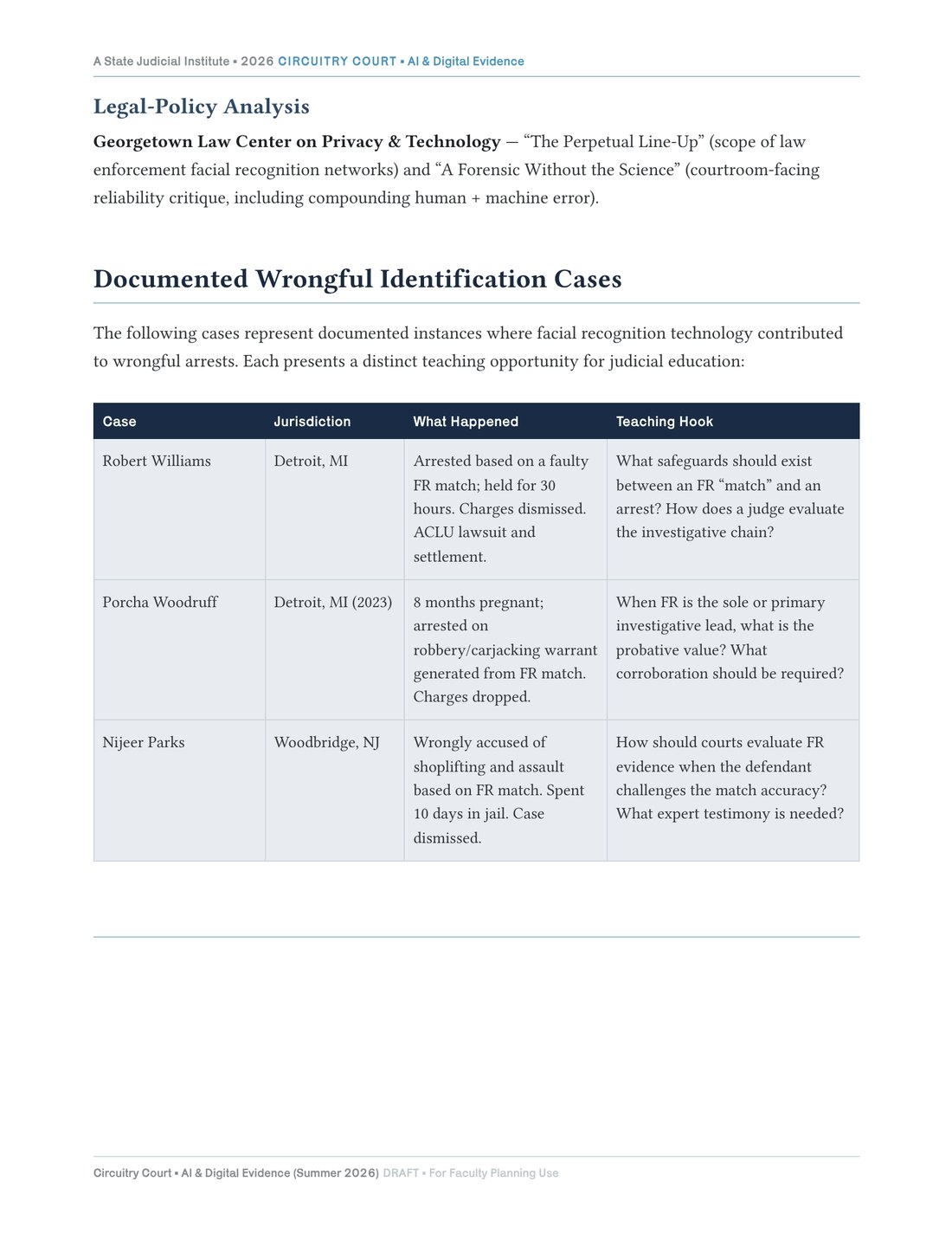 Page 3
- On record
Face-recognition matches have led to wrongful arrests
“The following cases represent documented instances where facial recognition technology contributed to wrongful arrests. Each presents a distinct teaching opportunity for judicial education: [...] When FR is the sole or primary investigative lead, what is the probative value? What corroboration should be required?”
Page 3 · The three cases as the brief lists them. No source is cited on the page
Where it shows upThe proposed close of the day“The bench card includes questions about tool validation, known error rates, demographic testing, and corroboration requirements”
Page 3